Category Archives: The Great War

After Néry…The Batteries of 1 RHA in the First World War

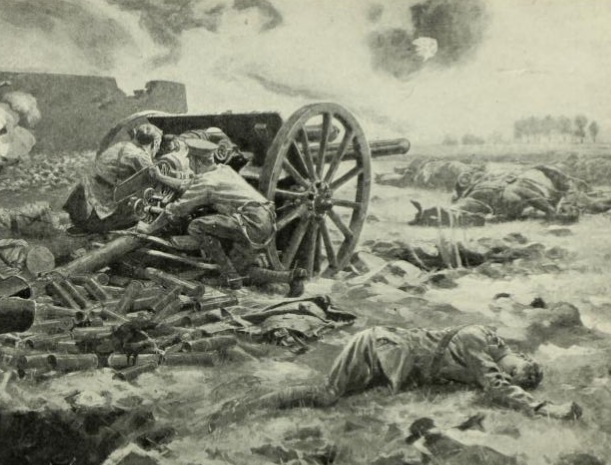
Last_gun_at_Nery

Two dramatic episodes from 1914 have been the centre of  commemorations for the Royal Artillery. E Battery were supporting the cavalry screen ahead of the BEF when they fired the famous first shot on 22nd August 1914. The role of L battery in the “Affair at Néry” on 1st September 1914 has caught media and public attention ever since 1914. The German surprise attack on the 2nd British Cavalry brigade was beaten off with heroic acts rewarded by three Vcs and two MMs to the men of L Battery, and led to the award of the Honour Title of “Néry”. These events have tended to overshadow the other actions undertaken by E and L battery during the First World War, and by other batteries of the current 1st Regiment RHA.(1)

The current batteries are A Battery (The Chestnut Troop), B, E, L (Nery) and O Battery (The Rocket Troop) . Their 1914 home stations and wartime deployment are summarised in the following table.

Battery Station in 1914 Deployment
A Ambala India Indian Bde RHA then XVIth Bde RHA 4 Cav Div/Army troops
B Ambala India XVth Bde RHA 29 Div
E Newbridge, UK 1 Cav Div then 3 Bde RHA – 2 Cav Div.
L Aldershot, UK 1 Cav Div then XVth Bde RHA
O Ipswich,UK Vth Brigade RHA 8 Div then Army troops


Each Battery was commanded by a Major with a battery captain, and three subaltern section commanders. Two Subsections formed a Section and in a six gun battery these would be designated as Left, Centre and Right Sections. A Subsection consisted of a single gun and limber drawn by six horses (with three drivers), eight gunners (riding on the limber or mounted on their own horses), and an ammunition wagon also drawn by six horses (with three drivers).
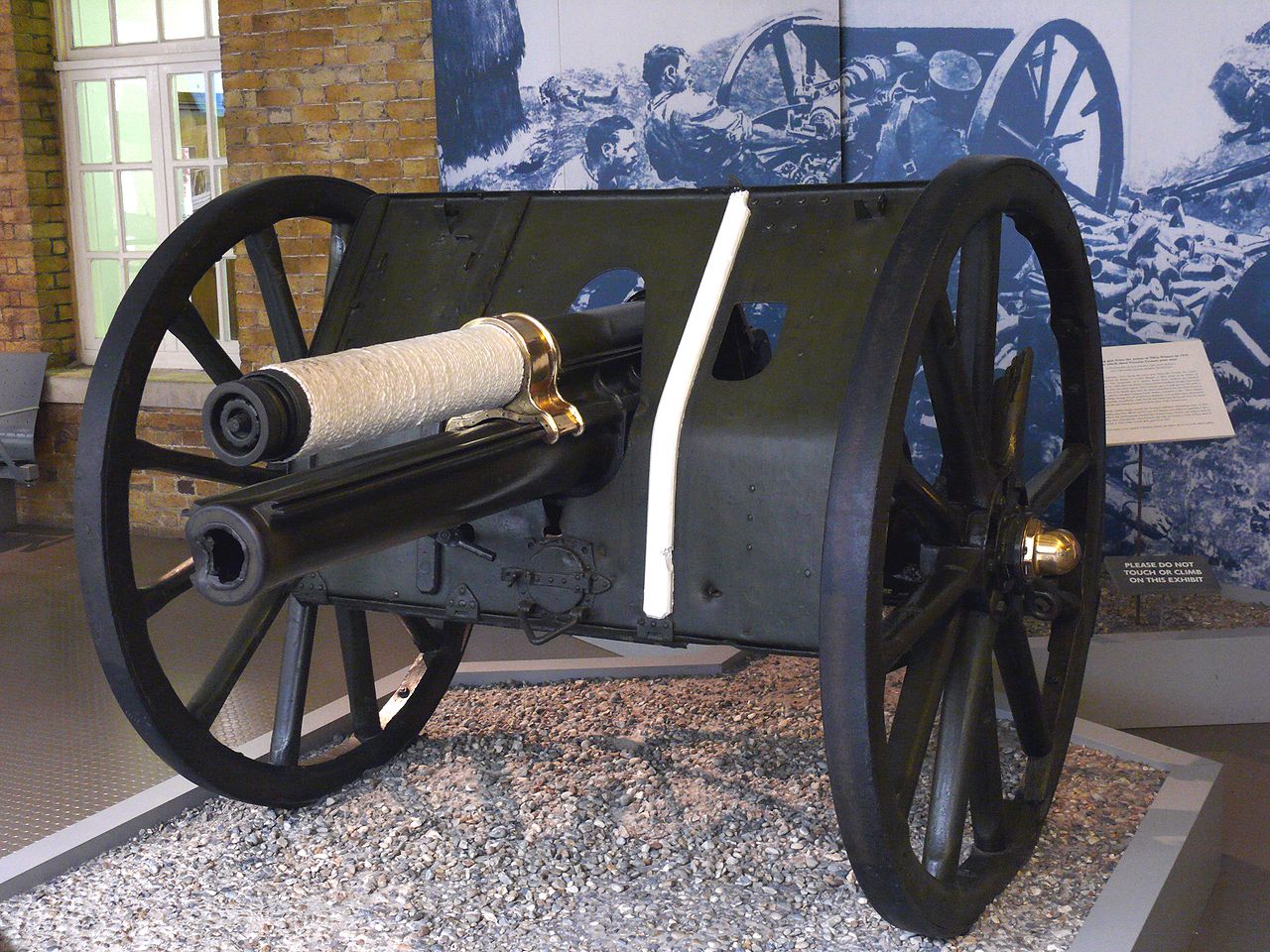
The 13 Pdr Nery gun on Display in the Imperial War Museum london
The 13 Pdr Nery gun on display in the Imperial War Museum london

RHA batteries were armed with the 13 Pdr Gun. The 13 Pdr fired a 13 lb shrapnel shell to a range of 5,900 yd (5,400 m). The 18 Pdr, which equipped the Field Artillery fired a projectile weighing nearly 50% heavier and for which an HE shell was in service by October 1914. It also out-ranged the 13 Pdr and had a range of 6,525 yd (5,966 m) and 7,800 yd (7,100m) with the trail dug in. During the course of the war all but E Battery were re-equipped with 18 Pdr.

The introduction of the dial sight had made it possible to operate in an indirect role. However the flat trajectory of the 13 Pdr and the limited signal equipment tended to restrict indirect fire to situations where the battery commander could position the guns behind cover and act as the observer from a position where he could see the guns and the target. There were no established forward observer parties, but as trench warfare developed and telephones and wire became more widely available, an observation post might be deployed at some distance from the battery or a liaison team sent to the infantry.

Although indirect fire techniques were known and practised, the RHA went to war with equipment better suited to operating in the direct role. The 13 Pdr had a flat trajectory and it would be difficult to find good indirect gun positions in broken country such as the industrial landscape of Mons. The only ammunition provided for the 13 Pdr was shrapnel, which is very effective against troops in the open, but almost useless against troops behind cover.

The part the Horse Artillery played in the opening months was not far removed from pre war expectations. British Cavalrymen were equipped with the same SMLE rifle as the infantry and marksmanship training, which gave them an edge of the carbine equipped Germans in dismounted action. However, it was the battery of 13 Pounders supporting each brigade which contained the major part of its fire power, and guns which would inflict the majority of casualties in the Fist World War..
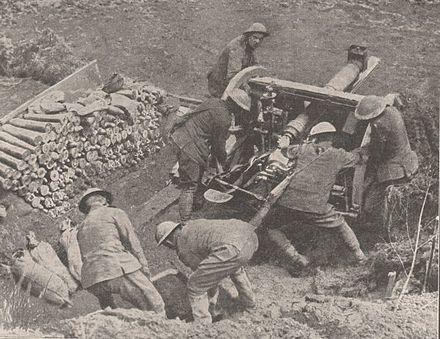
Positioning a 18 Pdr Gun The Battle of Arras April 1917

The Commonwealth War Graves Commission (CWGC) records 233 men as serving in one of the batteries. (2)  Given WW1 norms of two wounded for each dead, this would imply around 700 casualties during the war. The establishment of a 1914 RHA Battery was five officers and 200 other ranks, giving 1,025 for the five current batteries. This gives a conservative estimate of a fatality rate of just under 23% of the establishment across all batteries. The casualties were not evenly distributed. L Battery’s 78 fatalities implies a figure of killed and wounded well in excess of the battery establishment of 205. Nor was 1914 the year in which L Battery suffered its highest casualties.

 Current 1 RHA Batteries Fatalities 1914-1921
A B E L O All Batteries
1914 0 0 4 26 0 30
1915 1 12 1 9 3 26
1916 2 8 0 1 5 16
1917 3 30 9 30 17 89
1918 23 6 2 11 12 54
1919 0 2 3 0 1 6
1920 0 4 1 1 0 6
1921 3 3 0 0 0 6
Total 32 65 20 78 38 233

(Note that these figures are an indicative minimum.  The CWGC database does not always identify the unit in which a soldier served. . )

Even before Néry, the fortunes of war placed L Battery in a position to play a significant role in the battles of Elouges on the 24th and Le Cateau on the 26th. On each occasion they brought down fire on German troops attempting to outflank the army. Even without Néry curtailing their participation in the campaign, L Battery were one of the most actively engaged RHA Batteries.

The fighting in the early months of the First World War was very different to other campaigns on the Western Front, or even other campaigns of the war. The pattern of warfare was closer in some ways to that of the previous century. The battles were of short duration with one side disengaging. Mons, Le Cateau, Elouges and Néry can be identified by a single day. At Le Cateau the British Army even deployed anachronistically on an open plain with the guns drawn up in the front line as if it were 1815. It was not until the battle of the Aisne that both sides became aware of the power that C20th weapons gave to the defence. After the trench lines developed between September and November 1914 the character of the war changed to become one continuous engagement. There would be no more individual battle days as bloody as Nery, but a trickle of casualties throughout the four years of the war, with some days bloodier than others.

1915

In November 1914 O Battery arrived on the Western Front as part of the Vth Brigade RHA in the 8th Infantry Division’s artillery. . In 1915 The Chestnut Troop joined them on the Western Front as part of I Indian Brigade, Royal Horse Artillery. They both took part in the battles in the Neuve Chapelle area 1914-15.

The rebuilt L Battery joined B battery in the XVth RHA Brigade as part of the divisional artillery of the 29th Division in 1915. This division was formed from regular army garrisons around the world and first deployed in the Gallipoli campaign. It would become known as the “Indomitable” 29th and would take part in more attacks than any other formation. There is no specific monument in Gallipoli for the artillery of the 29th Division. However, one of the first fatalities suffered by the reconstituted L battery was Bombardier Darbyshire, who only relinquished the layers seat of F Sub at Néry after his ears and nose bled from concussion. He was killed on 12th July 1915 and is buried in Lancashire Landing Cemetery at Cape Helles, along with nine other horse gunners from B and L Battery. A further seventeen are buried or commemorated elsewhere in Turkey, Egypt and Malta.

 1916

   After the evacuation from Gallipoli the 29th Division was brought back to the Western front, in time for the big push on the Somme. The Divisional symbol of the red triangle can be seen at Newfoundland Park, and tin triangles can be seen on the packs of the soldiers from the divisions filmed on the First Day of the Somme.  At 07.30 on the 1st July the 2nd Royal Fusiliers and 16th Battalion the Middlesex Regiment stormed the crater formed by the detonation of the Hawthorn mine. 2 Lt Grant-Suttie and a party of telephonists from B Battery advanced with the CO of 16th Middlesex into the mine crater, but were forced to withdraw, with Bdr Port wounded, and Bdr Brockett and Driver Indge missing.  Brockett’s body was found and he lies in Hawthorn Ridge Cemetery No.1, Auchonvillers.  Indge’s was never identified but might be one of the 68 unidentified graves in this cemetery. He is commemorated on the Thiepval Memorial to the Missing.

 O battery also took part in the battle of the Somme supporting the operations of the 8th Division on its disastrous first day, and in October in the battle of Le Transloy. Three O battery soldiers are buried on the Somme.  The lower number of fatalities in 1916 than in 1917 and 1918 might be attributed to the weakness of the German counter battery artillery in the Somme.  Nor were any of the batteries placed in situations were they were exposed to small arms or direct fire.  There were very few occasions in 1916 where sufficient ground had been gained to justify moving the guns forward. No German counter attacks threatened the guns.

 1917
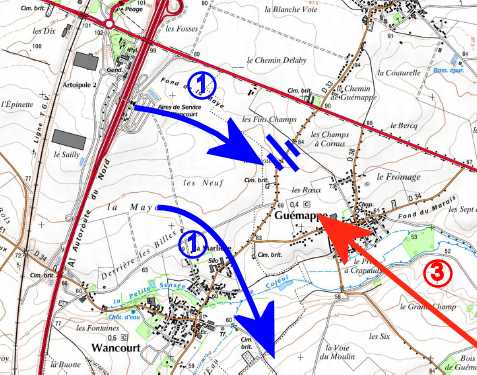
Second Battle of the Scarpe: 24 Apr 1917 15 Brigade RHA action. (1) 50 Div Captures Wancourt Ridge.  (2) 15 Bdee deploys forwards. (3) German Counterattack recaptures Guemappe
Second Battle of the Scarpe: 24 Apr 1917 15 Brigade RHA action. (1) 50 Div Captures Wancourt Ridge. (2) 15 Bdee deploys forwards. (3) German Counterattack recaptures Guemappe

1917 was the bloodiest year for the 1st RHA Batteries, and can be attributed to the three major British offensives in that year. The 29th Division (B & L ) and V Brigade RHA (O Bty) took part in all three offensives. E Battery in two and Chestnut Troop in one.
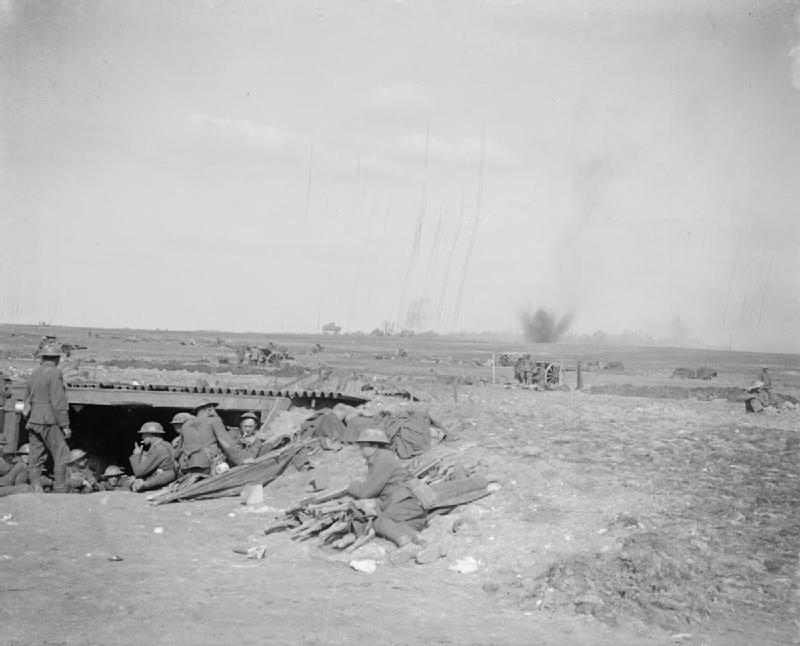
18 Pdr guns under fire at the Battle of Arras 24 Apr 1917

The five week long Arras offensive 9 April – 16th May 1917 was one of the most intense the BEF endured. The daily casualty rate over the course of the battle was higher than any other BEF offensive. The initial attack was very successful, largely due to improvements in artillery technology and tactics,. German batteries were located by sound ranging and flash spotting, improved fuses increased lethality and enabled wire to be cut more easily. Aerial observation techniques and creeping barrages made it easier for the infantry to assault. In 1917 O Battery’s Vth RHA Brigade became an army artillery brigade and used to support whatever part of the line needed additional artillery support. On 9th April they supported the attack on Vimy Ridge by the Canadian Corps.

When attacks were successful artillery would need to be redeployed forwards if the infantry were not to advance beyond artillery range. On 24 April B and L Batteries followed up an infantry advance into a valley just North of the Wancourt Tower. As soon as the success signal was given the guns galloped forwards. According to the infantry the advance of the guns was a magnificent and inspiring sight, carried out with great dash and skill.(3) Unfortunately a German counter attack drove the infantry off the ridge, leaving L and B Battery in the open within rifle and machine gun range of German troops. The operations on the Arras front between April and June 1917 cost the XVth Bde RHA 49 killed, (including the BC and another officer from B Battery and six other officers) 74 wounded (including officers from each of B and L officers) and a further 13 men evacuated with shell shock.
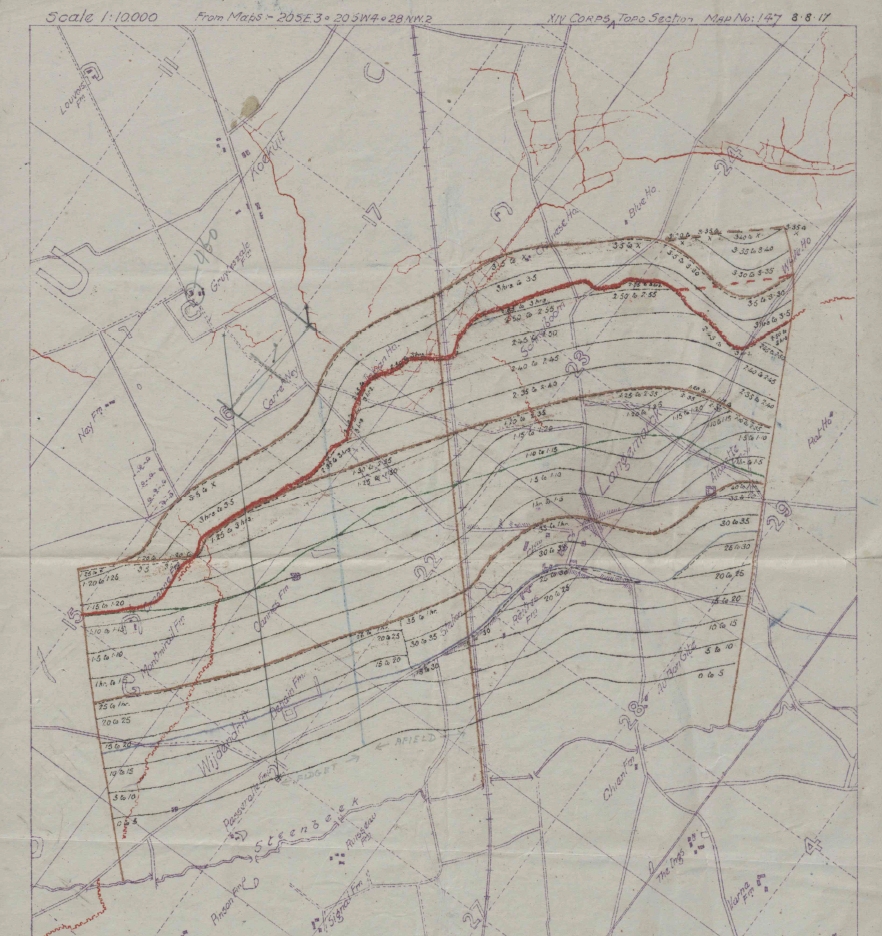
There is a memorial outside Langemarck to Harry Patch, the last survivor of the Great War whose and his comrades, took part in the the attack Langemarck on 16 August 1917.  B and  L Batteries supported fired on the fireplan Barrage map supporting the attack on .
There is a memorial outside Langemarck to Harry Patch, the last survivor of the Great War whose and his comrades, took part in the the attack Langemarck on 16 August 1917. B and L Batteries supported fired on the fireplan Barrage map supporting the attack on .

The 29th Division was used as an assault division twice in the 3rd Battle of Ypres, fought in a muddy artillery landscape. The artillery destroyed the drainage along with the buildings and vegetation. On 16th August the 29th division assaulted the Langemark area alongside the 20th Division which included the late Harry Patch and his pals. Seven weeks later 29 Division attacked again on 4th October towards Poelcappelle. The main memorial to this attack is the memorial to Private Fred Dancocks of the 4th Worcesters who was awarded the VC for his gallantry capturing a bunker near Namur crossing on the old Ypres-Staden railway line, which is now a footpath.

The 3rd Battle of Ypres was an artillery battle. The Germans held the ring of low hills around Ypres. As the allies advanced it was hard to find solid ground for gun positions around the muddy shell holes. Solid platforms might be constructed from wood or even boxes of rations. These made it easier for the German counter battery fire. During the campaign B, L and O battery would have spent a lot of time in their gas masks. The Germans unleashed a new horror on the battlefield during this battle, drenching gun positions with persistent blister agent – Mustard Gas.
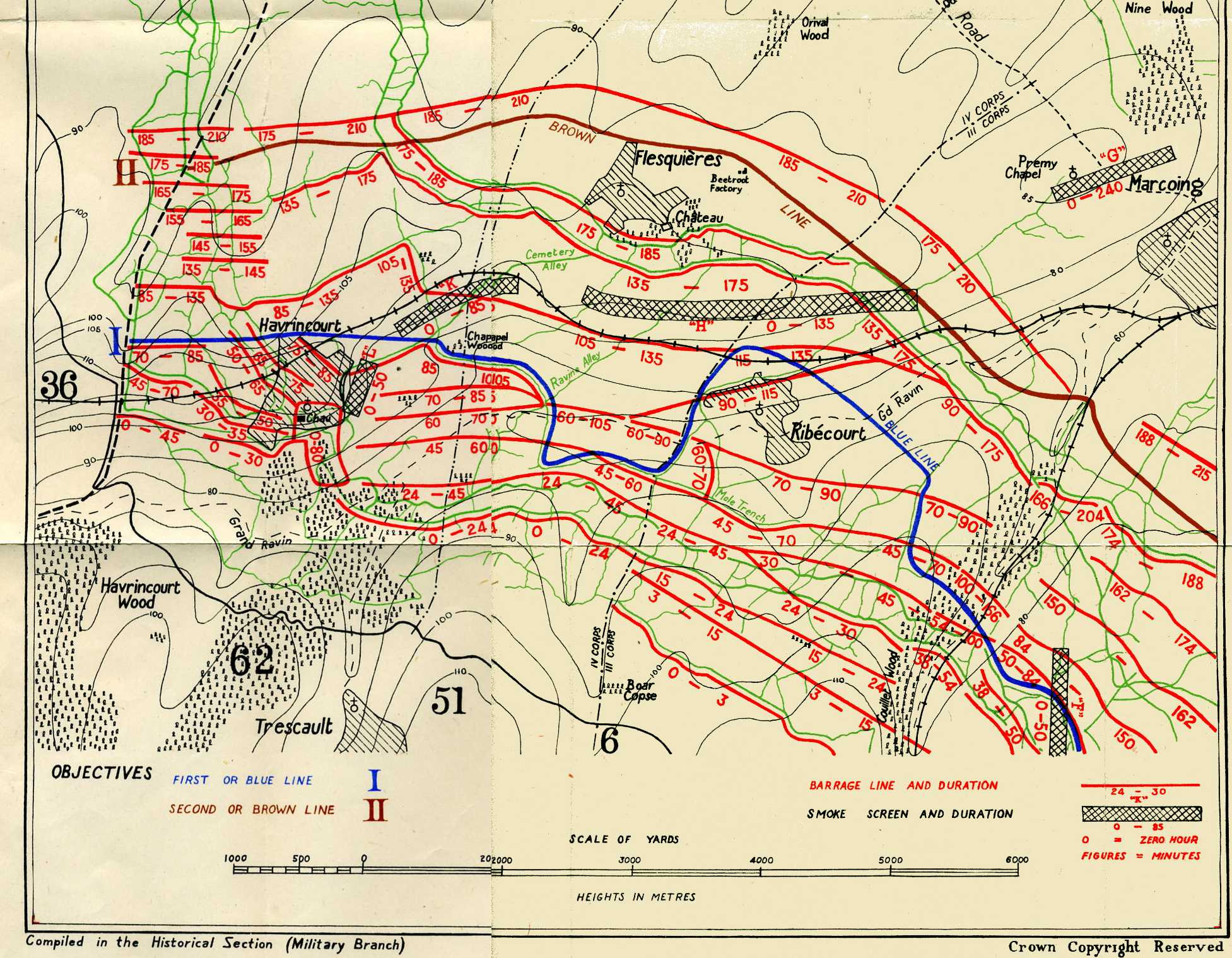
Part of the predicted fire plan supportign the attack at Cambrai
Part of the predicted fire plan supporting the attack at Cambrai

After the 3rd Battle of Ypres petered out in the muddy ruins of Passchendaele the 29th Division was picked to reinforce the 3rd Army’s attack at Cambrai. This battle was a test for new technology and tactics. Instead of a lengthy preliminary bombardment, the battle of Cambrai would use 400 tanks and a short intense fire plan based on predicted targets. The fire plan was as innovative as the massed use of tanks. All of the batteries of the current 1 RHA took part in this battle. The initial attack, on 20th November created a breach in one of the stronger sector of the Hindenberg line, capturing as much ground in fifteen hours as in five months in the Ypres Salient. The Germans too had a tactical surprise in store. On 30th November they too launched an attack under a heavy predicted barrage, in their case led by storm troops which infiltrated into and then broke through British infantry on the salient caused by the British success. This advance threatened the army artillery massed behind the British infantry, with some Germans within 40 yards of the guns. L Battery was order to act the rearguard to allow the army artillery to escape. They and a mixed force of infantry and artillerymen inflicted around 150 casualties on the Germans before withdrawing. The eight L Battery soldiers commemorated on the Cambrai memorial are evidence of the cost of this operation. The official history includes praise for L Battery, a rare mention of an individual battery.(4)

Cambrai would be a good battle for a 1st RHA commemoration. This the one battle in the war in which each battery served. It allows for a focus on the tactical and technical innovation which has characterised the professional ethos of the Royal Regiment.

1918
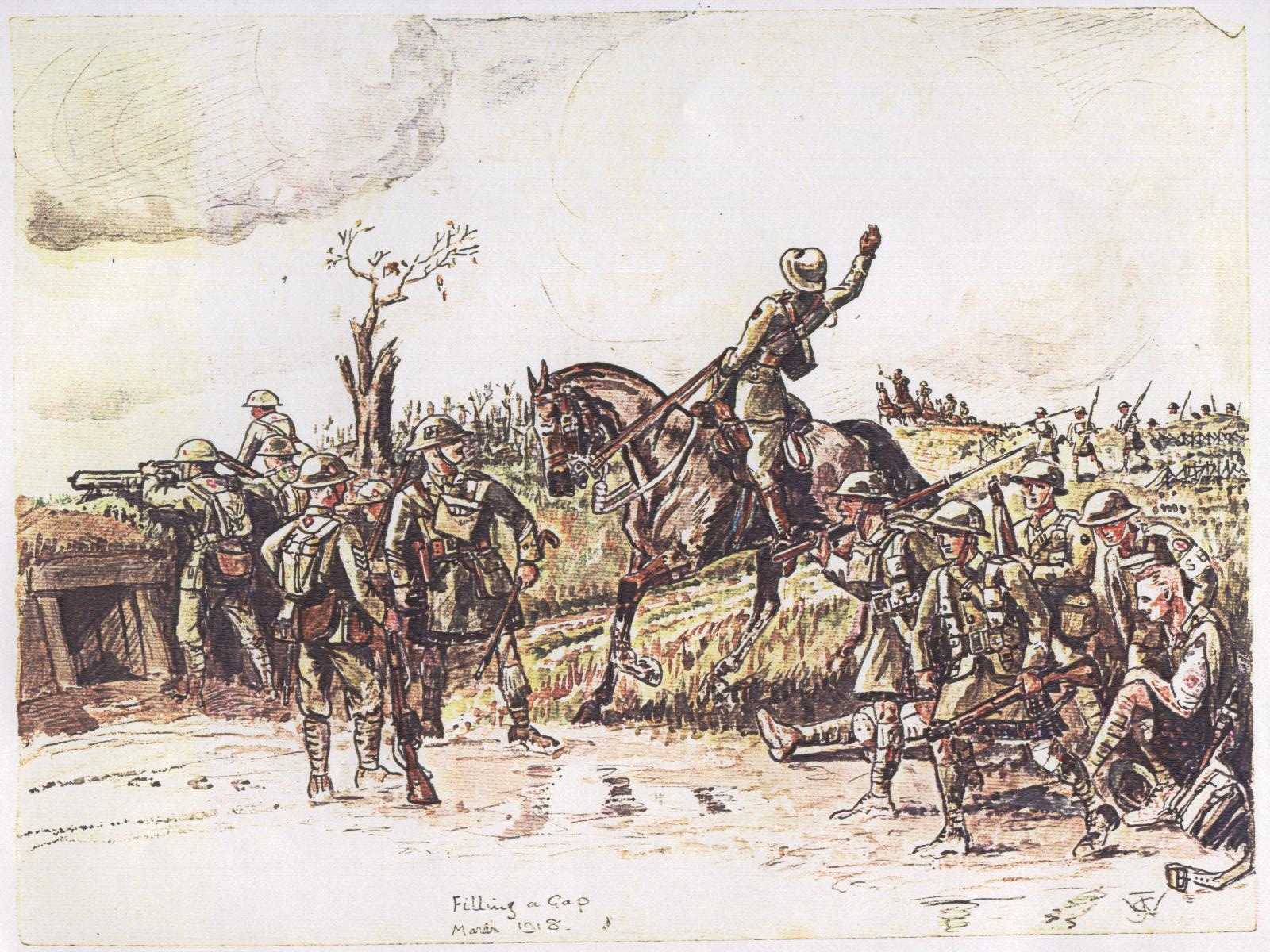
This Walford watercolour captures the spirit of the actions by Chestnuts, D and O Batteries in March 1918

At the beginning of 1918, the Germans had a chance to win the First World War before the American Army took the field in strength. The Germans redeployed troops released from the Eastern Front by the collapse of Imperial Russia. After three years of allied attempts to break the stalemate of the Western Front, the German offensives from 21th March initiated a eight months of mobile warfare.  Between March and June the Germans achieved a series of breakthroughs and forced the allies back.

All of the Batteries were involved in these battles.  The Cavalry divisions were deployed to plug gaps in the line. The majority of Chestnut Troop’s war dead are buried or commemorated on the Somme battlefields of 1918.  There is an account in the History of the Royal Artillery on the Western Front of how the observed fire from E and two other RHA Batteries held a German advance on the 22nd March for a whole day. (5) The BC of O Battery was given 600 infantrymen back from leave, eight lewis guns from No3 Kite Balloon Company to fill a gap in the line. (6)

These battles are rarely the subject of battlefield studies.  They are as significant as defensive battles as Mons or Le Cateau, but much larger.  These are the only major defensive battles fought by the British Army that approach the scale of the operations on the Eastern Front in WW2.
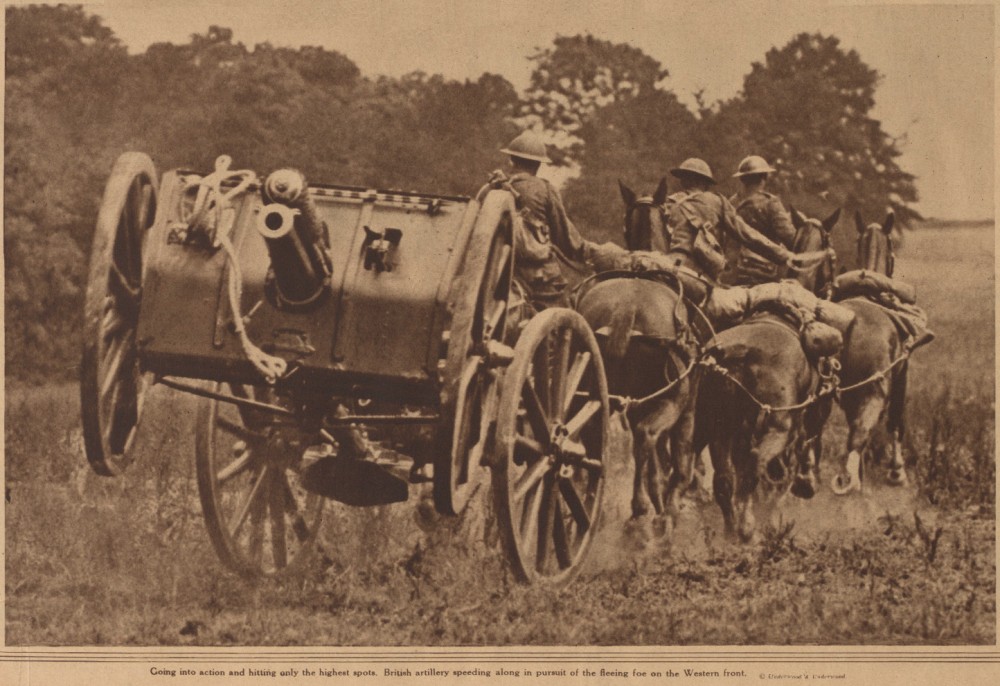
"British Artillery speeding along in pursuit of the fleeing foe." Did the NY Tribune publish a picture of E Battery in October 1918?
“British Artillery speeding along in pursuit of the fleeing foe.” Did the NY Tribune publish a picture of E Battery in October 1918?

The tide turned in August with the dramatic breakthrough at Amiens which repeated the techniques demonstrated at Cambrai, but on a larger scale.  450 tanks supported by a surprise predicted barrage by just under 1,500 guns and 800 aircraft broke through and destroyed a German army in what was the “Black day” for the German army.  Chestnut Troop, E and O Battery took part in these operations.
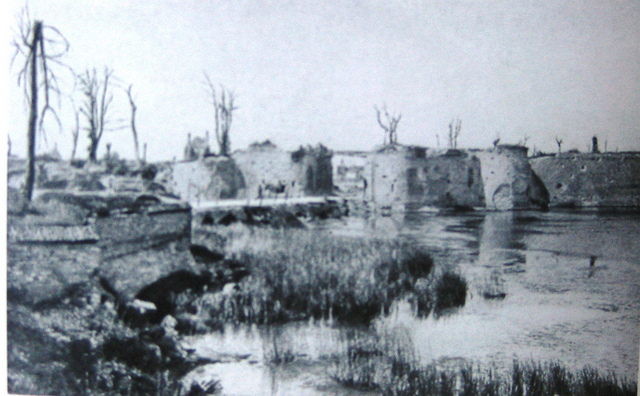
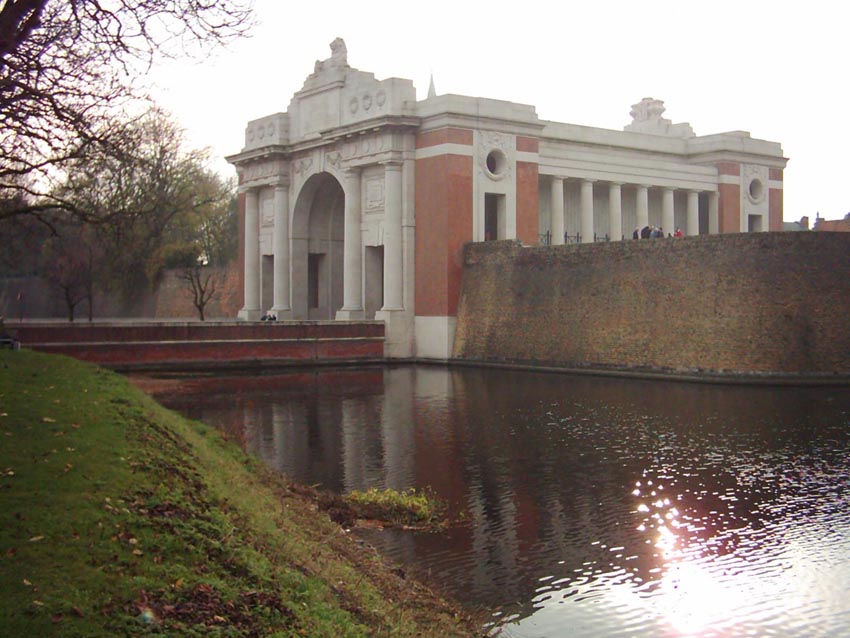
Menin Gate 1918. From positions on the Left of this view, B and L batteries fired  the barrage behind which the infantry cleared the Germans from Ypres ay the end of the war.
Menin Gate 1918. From positions on the Left of this view, B and L batteries fired the barrage behind which the infantry cleared the Germans from Ypres ay the end of the war.
The Menin Gate today

After Cambrai the 29th Division was redeployed to the Ypres sector and fought in the defensive battle of the Lys and in the counter attacks in the summer On the 27th September 1918 B & L batteries, with the other batteries of 15 Bde RHA came into action outside the Menin Gate in Ypres.(7) The following morning they fired a creeping barrage in support of the 29th Division attack which recaptured the ground ceded in April capturing the village of Gheluveldt by the end of the day. L and B Batteries were deployed forwards to Gheluveldt on the 30th September, and supported the attacks over the River Lys in October.

1919 and Afterwards

The Armistice did not mean demobilisation.  The CWGC records war dead until 1921 as the regular army was deployed to respond to the messy aftermath of the War.  The CWGC records the deaths of Lance Naik Batu Khan of Chestnut Troop in St. Sever Cemetery Extension, Rouen (23 Dec 1918) and  Driver Noor Mohammed of B Battery in Haidar Pasha Cemetery in Turkey (30 Jan 1920), and serve as a reminder of the British Army as an Imperial force and the Regular Army’s relationship with the Indian Sub continent.

The history of 1st RHA’s batteries on the First World War is that of the Western Front, its batteries were ubiquitous, “quo fas et gloria decunt”. Their actions took place among some of the familiar land marks of the Western front. Their battles tell the story of the development of technology and tactics during the wear and the part that the Gunners.  Anyone taking a professional interest in the develo-pment of artillery on the battlefield would be remiss if they restricted their interest to the 1914 battles.

These were also actions in which at least 233 men lost their lives and perhaps 500 wounded. One of the key themes of commemoration is Remembrance, which should include understanding what these men did and why.  The Centenary is an opportunity to visit the graves, memorials and the places where these men fought and fell. Of course,  we celebrate the achievements of the Bradbury, Dorrell and Nelson at Nery, worthy of the highest award for gallantry that Britain can bestow. It is proper that L Battery remembers these men and the others that were lost at Nery. But the Centerary ought to be the time to find out about some of the other men who served the guns and remember them.  Were the eight members of L Battery who fell on 30th November at Cambrai necessarily less brave? Were any of the men who fell any less mourned?

While many people are familiar with the battles and battlefields of the Western Front, far fewer have explored them from the Gunner’s point of view.  The actions by the 1 RHA batteries are ideal topics for battlefield studies, conveniently located from the UK.  The Centenary of the First World War is an ideal opportunity to undertake low level battlefield studies.

For more information on planning battlefield studies ands staff rides contact Gunner Tours  www.gunnertours.com

gunner tours logo white on brown

 NOTES

[1]   This article is based on a talk given to the Officers of the 1st Regiment Royal Horse Artillery on 8th April 2014.

[2]  www.CWGC.org  These are minimum numbers.  The CWGC also lists RHA  as “15 Brigade RHA,”  which may include soldiers who might or might not be members of B or L Battery.  They might have been members of Y Battery, the Warwickshire TA RHA Battery or the Brigade Ammunition Train.

[3]  Farndale The Royal Regiment of Artillery on the Western Front

[4]  Esmond, J E. Military Operations France and Belgium 1917, The Battle of Cambrai  CH XV  HMSO  1934

[5]  War Diary D Battery RHA quoted in Farndale The Royal Regiment of Artillery on nthe Western Front

[6]  Esmond, J E. Military Operations France and Belgium 1918, the German March Offensive and its preliminaries, CH XV  HMSO  1934

[7]  WO/95-2291 15 Bde RHA War Diary Entry September 1918

Forgotten battlefields of the Aisne

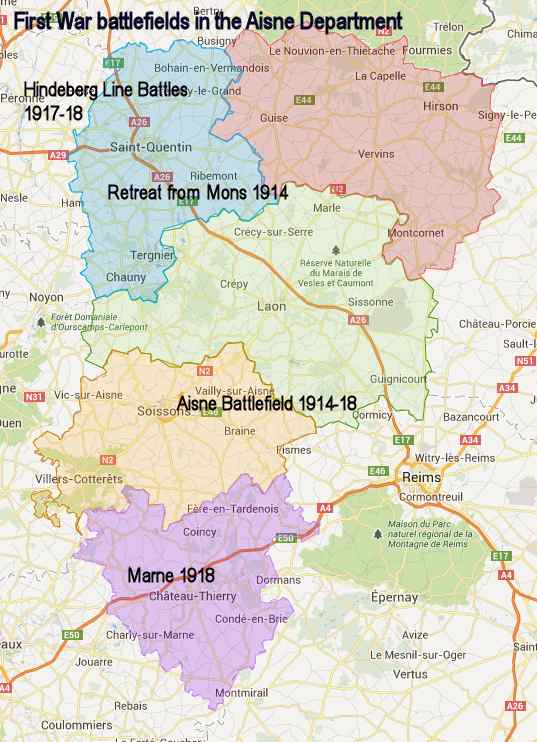
aisne departmental map
Great War Aisne Battlefields

The Aisne battlefields are in some ways a forgotten corner of the Western Front. Most British visitors to the Western Front tend to focus on the battlefields of Flanders and the Somme, or hurtle across it en route to Verdun, the iconic French battle. Yet the battlefields in the Aisne, the bordering department south of the Somme Region, play a significant part in the development of the Western Front, have a special place in the story of the British Expeditionary force and are the resting place of several thousand British soldiers.

The Department of the Aisne forms an inverted triangle with St Quentin near the top left corner and the town of Château Thierry near the base. The northern half of the department is part of the Picardy plains. The southern half is much hillier and cut by the Oise, Aisne and Marne rivers flowing East to West. Battlefields tend to be determined by physical geography rather than administrative regions. Thus the department plays an significant role in several battlefields, only one of which takes its name from the department.

THE OTHER SOMME BATTLEFIELD

There are geographic and commercial reasons why British battlefield tourists tend to miss out the Aisne. The Somme is that bit closer, and even then most British visitors focus on the battlefields around Albert, the site of the dramatic and costly first day of the Somme, and popularised in literature from Siegfried Sassoon to Sebastian Faulks. There has also been a major investment in the Somme in heritage tourism, from the development of the Thiepval interpretation centre, to the establishment of the Museum of the Great War in Peronne, and there is the well organised support for British tourists and the tourist trade. There is a risk though, that the focus on that which is easiest to visit distorts our understanding of the history and what it means.

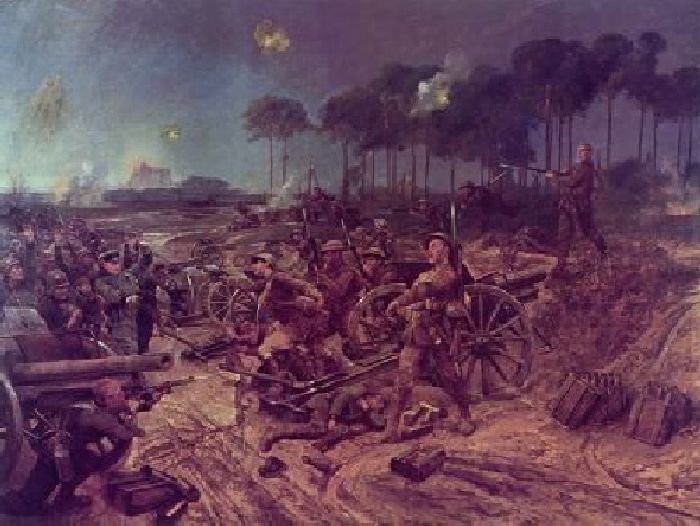
The Manchester Regiment captures a German Battery on Manchester Hill.

The Northern part of the Aisne department centres on the town of St Quentin. This area tells a different story of the battles we know as the Somme. The most obvious features are the remains of the Hindenburg line, the fortified line created due to the high cost to the Germans of the battle of the Somme. We don’t often see the 1916 Somme battle as a “victory”. The huge investment in developing the Hindenburg line and the spiteful destruction of everything of possible value in the land they evacuated indicates that the Germans saw the Somme as a defeat. This area included the sites of actions in the advance to the Hindenburg line in March 1917. The village of Francilly-Selency includes reminders of this in the monument to the 2nd Battalion the Manchester Regiment which liberated the village in March 1917, in the action during which one of their officers, the poet Wilfred Owen, was wounded.


Lieutenant Colonel Wilfrith Elstob VC

If we relied purely on popular culture, the Great war was not won but fizzled out in an Armistice, whether in a hail of bullets in no man’s land in Blackadder or with the tunnellers still under the static trenches in Bird Song. However, a visit to the Battlefields around St Quentin bears witness to the violent climax to the First World War on the Western Front. In March 1918, Manchester Hill, captured by Wilfred Owen’s battalion the previous spring, was occupied by the 16th Battalion the Manchester Regiment, understrength and exhausted from the Passchendaele campaign. This was one of the British redoubts isolated by German storm troops on the first day of the Kaiserschlacht and where its commanding Officer fought to the death, and was subsequently

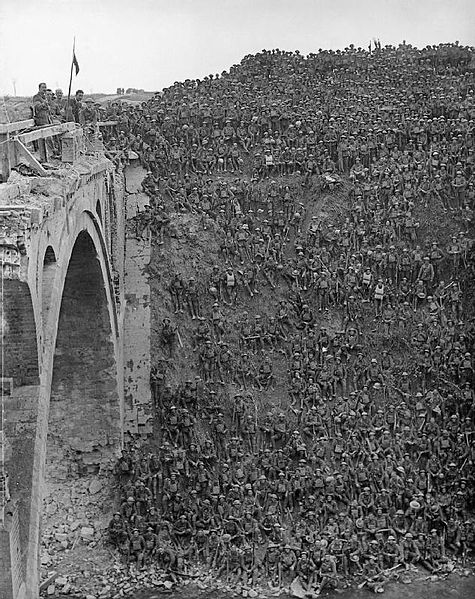
Men of the 137th Brigade, 46th Division, being addressed by Brigadier General J C Campbell VC CMG DSO on the Riqueval Bridge over the St Quentin Canal, which formed part of the German's Hindenburg Line, broken on 29 September 1918.
Men of the 137th Brigade, 46th Division, being addressed by Brigadier General J C Campbell VC CMG DSO on the Riqueval Bridge over the St Quentin Canal, which formed part of the German’s Hindenburg Line, broken on 29 September 1918.

awarded the Victoria Cross. The Hindenburg Line positions north of St Quentin stormed by the British, Australian and American troops 28 September-3 October 1918, are still very visible and provide evidence of the story of the allied determination, skill and courage that overwhelmed the Germans in 1918. At this point the German defences were based on the Canal du Nord, a major obstacle protected by barbed wire and concrete bunkers. The tactical problem can be compared with the D Day landings. The bridge at Riqueval, seized by Captain Charlton and nine men can be compared to the capture of Pegasus Bridge on D Day. It is one of the most evocative places, and captured on a camera.

The fighting did not end at the canal. The concrete bunkers of the Hindenberg line are much better preserved than the earthworks of the Somme. The BBC TV Programme ”Who Do You Think You Are?” featured Matthew Davis the descendent of William Henry Johnson VC winner seeking the story of his ancestor. http://www.bbc.co.uk/news/magazine-23109590


Lance Corporal William Coltman VC

Close to here, at Mannequin Hill, N.E. of Sequehart, Lance Corporal William Harold Coltman, of 1/6th Bn, North Staffordshire Regiment, carried out the actions for which he was awarded the Victoria Cross. William Coltman, whose Christian beliefs would not allow him to kill another man was Britain’s most highly decorated serviceman of the First World War ( 1914-1918 ). In the last two years of the war he was awarded the Victoria Cross, Distinguished Conduct Medal twice, and Military Medal twice, acting as a stretcher-bearer.

THE AISNE – THE BIRTH OF TRENCH WARFARE

Aisne Valley
Aisne Valley
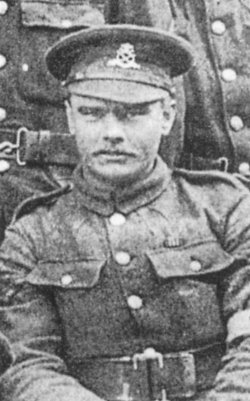
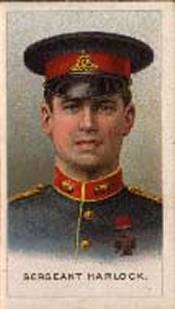
Sgt Ernest Horlock RFA VC "For conspicuous gallantry on 15th September, near Vendresse, when his Battery was in action under a heavy shell fire, in that, although twice wounded, he persisted on each occasion in returning to lay his gun after his wound had been dressed.—London Gazette 1915
Sgt Ernest Horlock RFA VC “For conspicuous gallantry on 15th September, near Vendresse, when his Battery was in action under a heavy shell fire, in that, although twice wounded, he persisted on each occasion in returning to lay his gun after his wound had been dressed.—London Gazette 1915

South of Laon is the area of the Aisne battlefields.  The department included the battlefield is bordered by the city of Soissons in the West and Berry au Bac in the East, and stretches as far south as the River Marne and the city of Laon in the North. The countryside is a little more alien for the British visitor. The Somme Battlefields are geologically similar to Southern England and the rolling countryside and large fields are similar to the landscape of Hampshire. Much of the fighting centred on the high ground North of the river Aisne. The heights are often referred to by the name of the road along the heights, the Chemin des Dames.

The War first came to the area in September 1914 as the French and British armies fell back south pursued by the Germans. The German Schlieffen plan finally unravelled in the battle of the Marne between 5-12th September 1914 and the Germans pulled back. When the allies advanced north many could be forgiven for thinking that this war was nearly over. There had been an advance, a big battle and now the invaders were in full retreat. But, when the British Expeditionary Force (BEF) crossed the river Aisne, they found the Germans dug in on the spurs on the high ground overlooking the rive Aisne and supported by plentiful artillery. Despite heroic efforts in over a week of fighting, the BEF were unable to dislodge the Germans and both sides had started to dig trenches. Field Marshal Sir John French, the commander of the BEF wrote to the king “I think the battle of the Aisne is very typical of what battles in the future are most likely to resemble. Siege operations will enter largely into the tactical problems – the spade will be as great a necessity as a rifle

There is a lot to see in the area from the BEF experience on the Aisne. The ground itself is evocative, and much as it was in 1914. You can still see the bridging site where the Royal Engineers bridged the river next to the damaged bridge. The story of the BEF can be traced on the landscape and past the cemeteries with the reminders of the costs.

2013-08-04 10.34

THE CHEMIN DES DAMES –1917 THE CALVARY OF THE FRENCH ARMY

The Chemin des Dames area was the site of the disastrous Neville Offensive in May 1917. The newly appointed commander of the French Army, General Robert Neville, thought that he had discovered the secret of the offensive based on the experience of successful limited attacks on the Somme and Verdun. He massed hundreds of guns and the cream of the French army, including tens of thousands of African soldiers. Unfortunately for Neville and the French army, the Germans had tunnelled deep into the ground, developed defences in depth and found out when and where the attack would take place. After several days bombardment the attack started under atrocious weather conditions, for May. After 135,000 casualties the French troops had had enough. There were mutinies in several regiments. They were strikes really, with soldiers protesting about ill planned attacks, poor food and no leave.

The saviour of Verdun, General Petain was appointed as Commander in chief of the army. He is credited with restoring discipline and confidence to the French Army. He did so with a mixture of carrot and stick. He instigated improvements in pay and leave arrangement, and perhaps most significantly, he cancelled further major offensives. This allowed the French army to recover its confidence in its commanders through a series of carefully planned and executed limited offensives. One of these, in November 1917 took place in the area around Fort Malmaison on the Aisne and resulted in the Germans withdrawing from the Chemin des Dames, the objective on the first day of the Neville offensive. The other implication of the French Army mutinies was that the burden of warfare on the West would have to be borne by the British until the American army could be mobilised and brought to Europe.

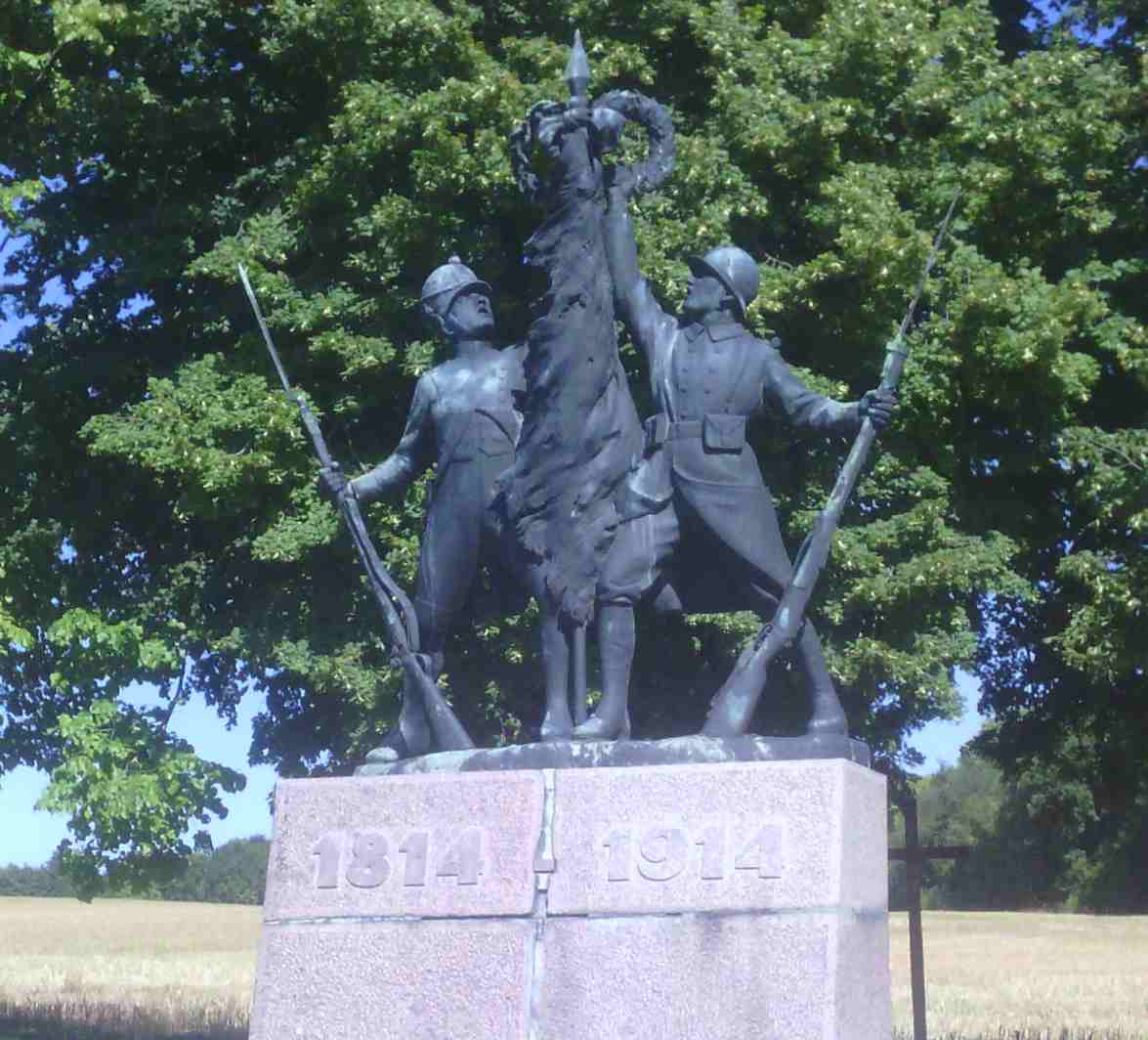
1814 and 1914 memorial

Arguably the 1917 mutinies had another legacy, in the French army of the Second World War. There is a comparison with Verdun. Verdun is a story of determination and sacrifice characterised by “They shall not pass”. The Chemin des Dames is where the French army reached the limits of endurance. It can be characterised by the bitter words of the Chanson de Craonne. ” It’s in Craonne up on the plateau That we’re leaving our hides ‘ Cause we’ve all been sentenced to die. We’re the ones that they’re sacrificing.”

There is a lot to see on the Aisne battlefield from the 1917 battles. The battlefield itself, like much of the

The Battle of the Aisne May 1918: 8th Infantry Division dispositions

area around Verdun was deemed to be too devastated to be restored for agricultural use and designated a “Red Zone.” Although subsequently much agricultural land has been recovered, there are still tracts of the battlefield preserved as it was at the end of the First War, with the ruins of abandoned villages such as Craonne. There are also plentiful interpretive panels and panoramas relating the landscape of the battlefield. One focus for interpretation is the Cavern de Dragons, a quarry that became the scene of underground fighting. This contains an imaginative museum and guided tour.

There are also some evocative memorials each of which tells something of the French army. One memorial has a statue of a French soldier of 1814 alongside one of 1914; a reminder that this was also the site of one of Napoleon;’s last victories.

A group of elegant dark statues represents the spirits of the African soldiers who suffered so heavily in 1917. There is also a memorial to the first use of tanks by the French Army at Berry au Bac.

THE BRITISH ON THE AISNE IN 1918

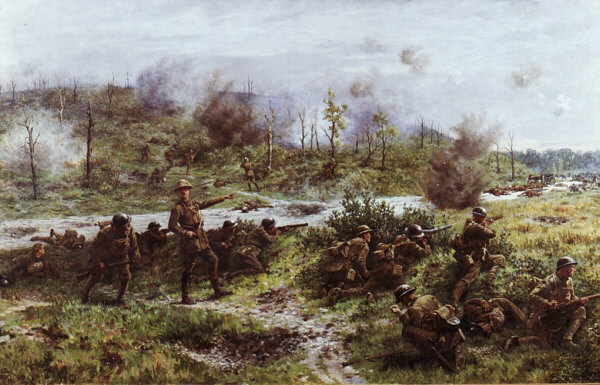
Last Stand of the 2nd Battalion the Devon Regiment at the Bois de Buttes May 1918: Willaims Barnes Wollen
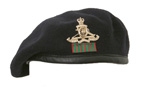
Gibraltar_battery_Beret
5 Gibraltar Battery still wear the ribbon of the Croix de Guerre on their berets.

The troops that made up the Ninth British Corps were singularly unlucky during 1918. As mentioned earlier, the Germans launched a series of offensives to try to win the war before the American Army appeared in numbers. The first offensive was between St Quentin and Arras on 21st March and took the Germans to within a few miles of Amiens. The second, the battle of the Lys, in April took the Germans close to undermining the Britsh in Flanders. In these five weeks the British Army had taken over 230,000 casualties, about the same as in the four month Passchendaele campaign. Five of the most battered British formations were transferred to the Aisne front, which had been a quiet sector since 1917. And so when the Aisne became the target of the German “operation Blucher.”, the plateau of California and Craonne was defended by the 4th Battalion the East Yorkshire Regiment of the 50th Northumberland Division. The resulting battle saw the British and French pushed back 25 miles to the river Marne. The 2nd Battalion the Devonshire Regiment and 5 Battery RFA distinguished themselves by the heroic defence of the Bois de Buttes despite being attacked by storm-troopers supported by tanks. Both units were awarded the Croix de Guerre which now is worn by all soldiers in 5 Gibraltar Battery RA and the Rifles. One of the best accounts of the fighting on the Aisne is published as “The Last of the Ebb:The Battle of the Aisne, 1918” by Sidney Rogerson Greenhill Books/Lionel Leventhal

BIG CASTLES AND BIG GUNS

Concerete gun pits of 13" German heavy artillery
Concerete gun pits of 13″ German heavy artillery

The hilltop village of Coucey has a particularly fine ruined château and the remains of town walls. But it’s ruin is a story of the First World War. Before 1914 the château of Coucey was the largest in France and a major tourist destination. But in 1917 it lay in the zone that the Germans were planning to abandon and was destroyed in what in retrospect seems spiteful vandalism. On the outskirts of Coucey is a different sort of structure. In the forest is a concrete emplacement for a giant gun used by the Germans for shelling Compiegne 20 km away.

Batlefields_Abroad1

THE 1918 BATTLEFIELDS OF THE MARNE – WHEN THE AMERICANS SAVED PARIS FRANCE AND WON THE WAR

On two occasions in the First World War the Germans nearly reached Paris. It was the high point of the German advances in 1914 and in 1918. The battles which saw the repulse of these attacks are both known as the Battle of the Marne. The turning point was the deployment of American troops on the Marne in June and July 1918. The Americans played a big part in halting the Germans on the Marne at Château Thierry, which is home to the impressive US Châteaux Thierry monument. Not far away is Belleu wood, which is where the US marines attacked in 1918. This battlefield has been preserved and it and the neighbouring US American Battle Monuments Commission Cemetery and the German cemetery are reminders of the part America played in the First World War.

2013-08-02 17.50

Travel to Overseas Battlefields can now be part of First World War Centenary Projects

Print

The Heritage Lottery Fund (HLF) scheme for small community projects for the First World War Centenary announced on 16th May 2013  can be used to support travel to battlefields and memorials outside the UK.

This was not highlighted in the launch announcement nor in the newspaper reports. However, it is clear from the Heritage Lottery Fund’s own website that projects which meet certain criteria will be eligible for for HLF funding. The HLF recognises the value of travel to battlefields and memorials in deepening people’s understanding of the war and its impacts. However, any visit must be linked to activities in the UK, must enhance peoples experience and learning, while not being the main focus of a project. HLF also expects a bidder to demonstrate that the cost of the activity abroad is as reasonable as possible, that there is a genuine need for the funding, and that travel will deliver outcomes in proportion to the funding requested.

Here are the relevant paragraphs from the HLF Q&A  page .  (Note this page has been replaced and briefing information is now here  )

Can our application include costs for travel and activity outside the UK?

Yes, if your project is based in the UK.

 We will fund the cost of travel and activity outside the UK (including the cost of bringing people to the UK) if there is a clear rationale for it in the project, it contributes to outcomes for heritage, people and communities in the UK and offers value for money.

 What costs can you cover outside the UK?

We can consider any costs that are associated with your project activities – this could include for example, travel, accommodation, insurance, or activities in museums or heritage sites involving people from the UK.

We ask that you explore how you can make the cost of your activity abroad as reasonable as possible. For example, you could send a small group of people to explore the heritage on a research trip who could then come and feed back to the rest of the group, or you could pay to bring people to the UK to share their expertise and insights. In order to fund travel and activities abroad, you will need to demonstrate that there is a genuine need for the funding, and that the additional outcomes achieved are in proportion to the funding requested. Some questions we might ask are:

  •  

    To what extent does the travel outside the UK enhance people’s understanding and learning, or broaden their perspectives of the war?

  • Could this level of understanding be achieved in a lower-cost way?
  • Will the travel and activity abroad enhance the long-term outcomes of the project? For example, will it result in long-term relationships which will result in new understandings of the war and its impacts?
  • Are you contributing any partnership funding?

Can we get a grant to take a group to visit the former battlefields and cemeteries in Europe?

 We recognise the value of visiting a site, and that this can deepen people’s understanding of the war and its impacts. You should show that a visit is linked to activities in the UK, and that it will enhance people’s experience and learning. The visit should not be the main focus of a project.

 If the main activity and cost in your project is visit abroad, then the project is unlikely to offer good value for money.

 Can HLF provide funding for projects outside the UK?

 No. Money raised through the National Lottery can only be invested in projects based in the UK.

This is very welcome news and should enable communities to draw on the battlefields themselves as a resource for the centenary commemorations. The Observation Post has been making the case for this funding ever since the Great War Commemorations were first discussed in 2011 and established the Men Behind the Memorial project to draw attention to the potential of the battlefields to develop our understanding of the War and its context.

Baldwin Battlefield Tours is developing a Centenary Advisory Service to support Community Groups with military historians and other resources to enable them to make the most of the Battlefields as part of their First World War Centenary Projects.

Logo

Why Walter Tull matters: why he should not get an MC – and a better cause for the campaigners

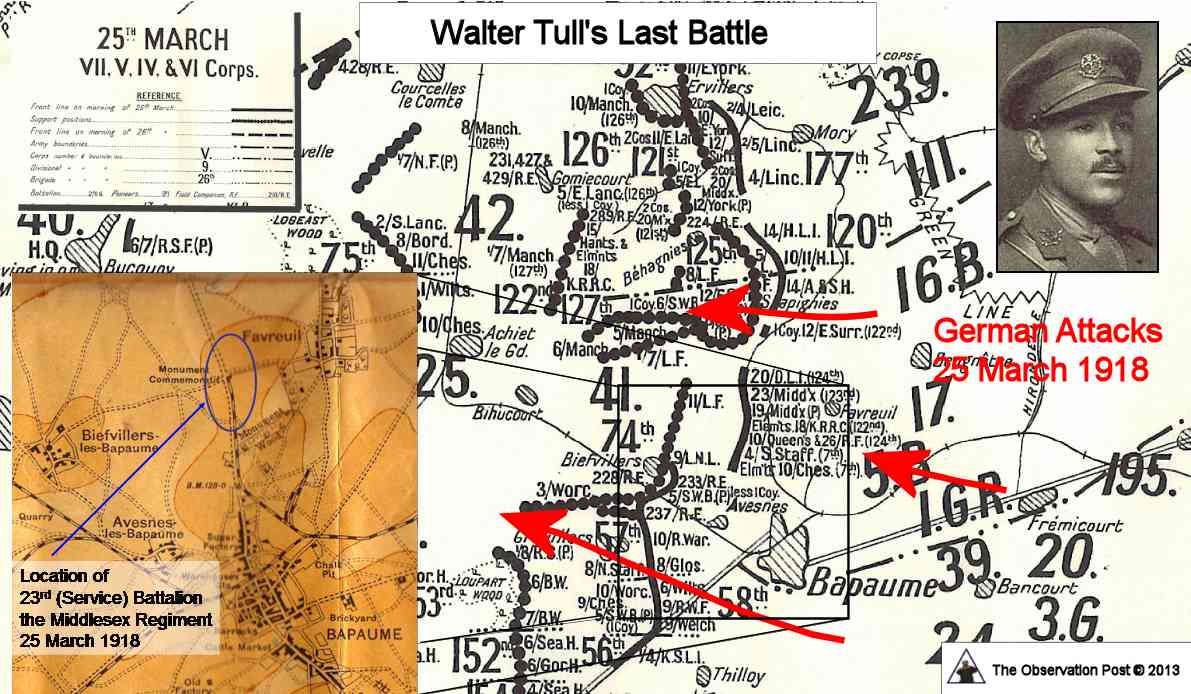
Walter Tull Map

Walter Tull was a man who is famous for being the first black outfield footballer to play in the Football  league and for overcoming the barriers of race and class to be commissioned as an officer in the Infantry in the British Army in the Great War.

In recent decades he has been championed as a historic hero and a role model for young black Britons. Philip Vassili has championed his memory, written a biography and a play and led a call for him to be awarded a posthumous Military Cross.
­
I first spoke to Philip Vassili in 2007 when I was researching Walter Tull for a­ visit to the battlefields of the Western Front by Henry Compton School, Fulham. This school had won funding from the TV show “Fortune: Million Pound Giveaway” to visit the Battlefields of the Great War. Duncan Bannatyne had said that these students would get nothing from a visit to the battlefields, but the deciding support was from Lord Archer.

Here is the show


And here is a video made by the boys themselves.  The video originally had an audio soundtrack – but its been disabled for copyright reasons.

Bishop Henry Compton School in Fulham was a school for boys aged 11-16. It was founded as a board school in the last quarter of the nineteenth century. The then Head of History Dan Lyndon showed me the records from the Great War. In the early years of the 20th Century the school educated boys to start their working lives in crafts and trades. Dan told me that he wanted to follow the stories of the ex pupils and teachers from their school. (One of the school’s alumni was awarded a VC for his actions in Burma in 1944, but that is another story). Dan also wanted to follow the story of Walter Tull, who the boys studied in Black British Month, as a focus for the key stage 3 topics on trench warfare.

Henry Compton School was a school that white middle class parents would spend tens of thousands in school fees or hundreds of thousands on a house to avoid. 30 different languages were spoken by the students attending the school, which had no sixth form. Many of the boys were refugees from across the zones of modern conflict, including four Afghans, a Palestinian and a Libyan. The boys were not angels. One came with a personal minder. However, this was not a failing school. The staff were very impressive. The teachers were committed and passionate about their subjects and students. Mr Ranji the Headmaster came on the tour and had a way of saying something very quietly that turned some boisterous or stroppy teenager into docility itself – a kind of “thug whisperer”.

The personal stories of some of the boys made an impression on me. The mother of one the Afghan boys clearly hadn’t understood what the trip offered and dispatched her son with a four day supply of kebabs and rice. I asked another whether his family were planning to go back to Afghanistan. The boy told me that his uncle had been and said that all was there was the trace of the house in the dust. When one boy asked me why the big hole in the ground was called a mine because where he was from mines are things you mustn’t stand on. I had to turn away for a minute. It brought it home to me how fortunate I am as a British parent that whatever dangers my children face growing up in London, anti-personnel mines aren’t one of them.

We visited the Western front to look at the soldiers’ experience of the war. We visited museums and trenches, did a bit of re-enactment. The school played along and organised themselves as sections of “the Fulham pals” platoon. We played a bit of military discipline with sections competing to be the first “On parade” We made some local connections to Fulham. We found the graves of a student and a teacher who were on the school’s roll of honour. We visited Hill 60 where a Fulham boy, Edward Dwyer, born a few streets from the school, had carried out the deeds for which he was awarded the Victoria Cross.

The one question that everyone wanted to know the answer to was “What did people like me do in the First World War?” The Menin Gate supplied a lot of answers with the names of soldiers from all over the Indian subcontinent and the West Indies. The Indian army memorial to the missing, the Portuguese cemetery at Neuve Chapelle and Russian graves in Arras supplied other links. Some boys made a bee line for the computer terminals at the Thiepval memorial to search for their own names on the Commonwealth War Graves Database. The Libyan boy proudly showed me the record that revealed that someone of his name had died serving Britain in the Libyan Frontier force in 1941. Was this tokenism? It was obvious that these were only tiny exceptional examples among the massed ranks of the Great War dead. No one can pretend that Britain of the Great War was as diverse as it is now, but there is a big psychological difference between “someone like me” and “no one like me”.

The boys were fascinated by Walter Tull. They had learned about him in lessons. As a footballer and soldier he was a hero and they obviously identified with him and his story. We visited the memorial to the Missing at Arras, and found Walter Tull’s name. They held a minute’s silence and one of the boys read the details of the CWGC reference.


We also found the area where he was killed in March 1918. The Regimental History mentioned that his unit was sited around the monument to the 1870 battle.


1870-71 memorial near Bapaume

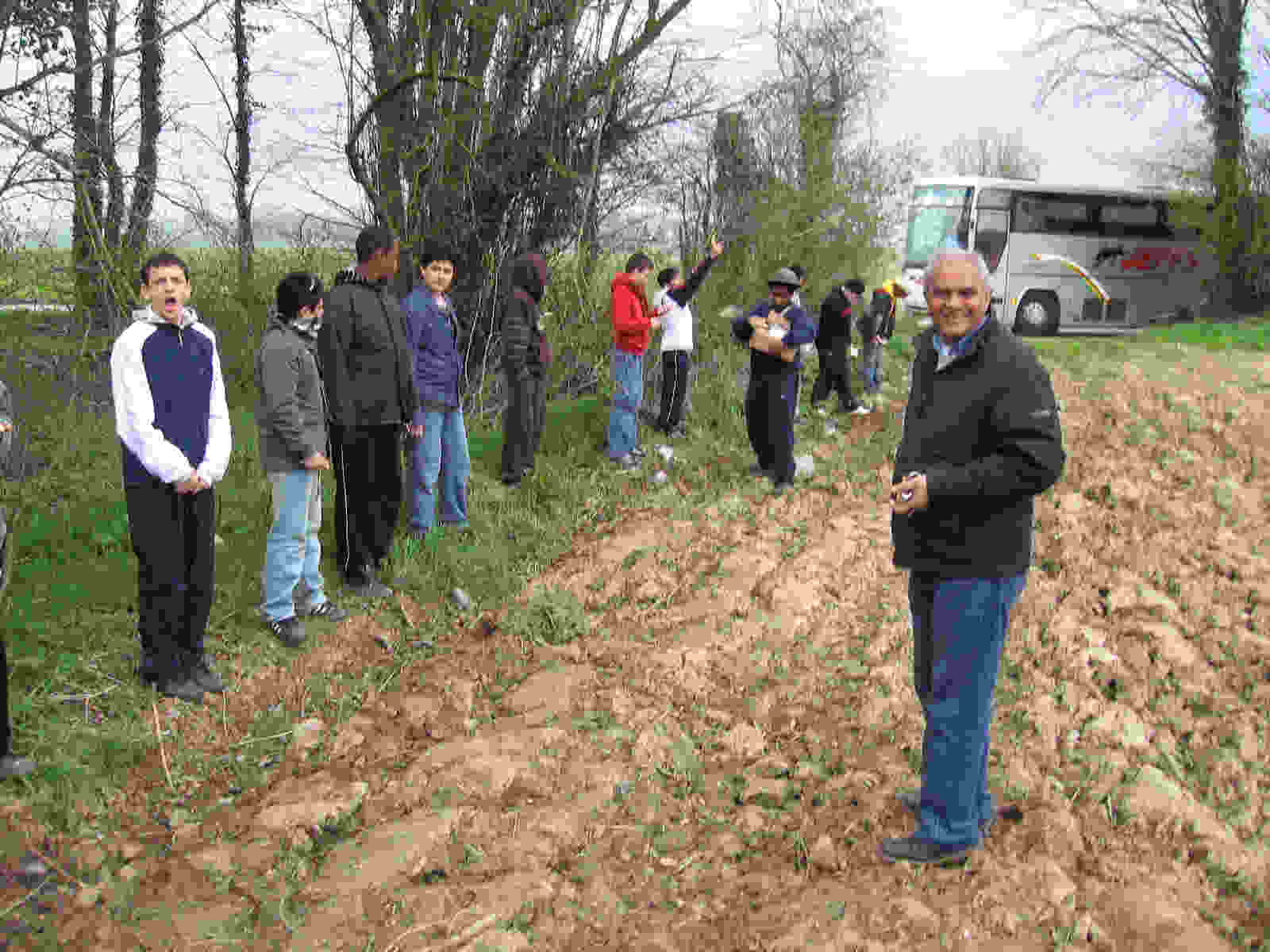
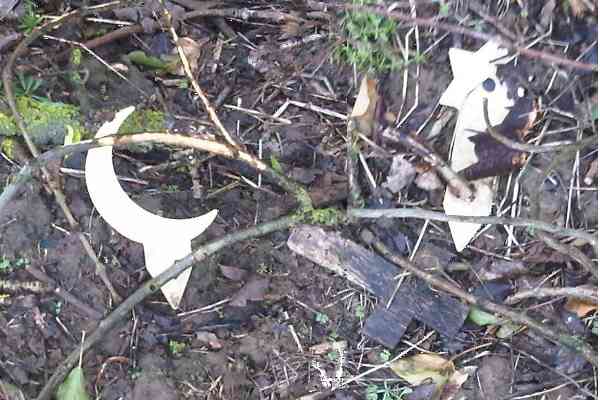
We held an act of Remembrance in a field across the road from the memorial. It is not a precise location, but it has to be within a few hundred metres and Tull’s body has never been discovered. The boys laid crosses, stars of David and crescents, which were still there  a couple of years ago

ww1 battlefields 28-31.3
Students from Bishop Henry Compton School prepare for an Act of Remembrance close to the spot where Walter Tull fell on 25th March 1918. Note Headmaster in Foreground and the “Platoon Sergeant” in the background distributing crosses, stars of David and crescents.

Did they get much from the tour? They were certainly engaged and asked some very lively questions of me and local guides and speakers. Some of the discussion put me as the guide on the spot. I vividly recall being asked about whether the Germans were anti-semitic in the Great War and the part that the Great War played in the rise of Hitler and the Nazis. One of the major benefits was in terms of citizenship objectives. Taking part in an trip to a foreign country behaving yourself in restaurants and hotels is all part of being a good citizen. These boys were good ambassadors of their school and created a positive impression with the people they met. Individual identity is an issue, and one of the objectives was to explore the story of Londoners in the Great War. At the end of the Tour the answer to the question “are you proud to be Londoners” was answered with a massive roar. Had this been 1914 this generation of “Fulham Pals” would have done their bit.

These boys didn’t ask to be brought up in London, yet must live in a society where at least some people are asking the question “what is your right to be here?” The answer “Because someone like me died for this country” is a powerful argument, and one that these boys had witnessed. These boys will now be in their twenties. Many of them are young black or Moslem men, two groups that are perceived as being most at risk of falling under the influence of criminal subculture or of Islamic extremism. The story of Walter Tull matters because he is a symbol and a role model that shows it is possible to succeed and cross the barriers of race and background.

You can see the boys and their tour for yourself. Only the first part of this video is available on Youtube. The film was shot by the boys themselves and edited by Dan Lyndon. The second half which included the visit to the site of his last action and the Arras memorial isn’t available publicly.

Walter Tull in the Great War

During the First World War Tull served in both Footballers’ Battalions of the Middlesex Regiment, 17th and 23rd, rising to the rank of sergeant and fighting in the Battle of the Somme in 1916. When Tull was commissioned as Second Lieutenant on 30 May 1917 (still in the Middlesex Regiment),he became the first black/mixed race combat officer in the British Army, despite the 1914 Manual of Military Law specifically excluding Negroes/Mulattos from exercising actual command as officers. He fought in six major battles: Battle of Ancre, November 1916 (first Battle of the Somme); Battle of Messines, June 1917; 3rd Battle of Ypres, July–August 1917 (Passchendaele, Menin Road Bridge); September 1917; Second Battle of the Somme, St.Quentin, March 1918; Battle of Bapaume, March 1918 (2nd Somme).

Walter Tull is remembered at the Arras Memorial, Bay 7, for those who have no known grave.

Another interesting fact about Walter Tull is that his brother also triumphed over barriers of class, birth and race. The two brothers were separated on the death of their father. Their mother died, and the father remarried. On his death the step-mother put both boys into orphanages. Walter ended up in the East End of London, Edward in Glasgow. Walter became England’s first professional outfield footballer while Edward became Glasgow’s first black dentist. Its remarkable that both brothers joined the officers mess/professional classes having a background in an orphanage, without any consideration of race. The Tull boys’ success says much about them and for the care offered by the orphanages which brought them up. That is the story which has been missed.

Why Walter Tull Should Not be Awarded a Posthumous Military Cross

The campaign for him to be awarded a posthumous Military Cross is misguided and misplaced. Walter Tull was an admirable man and is deservedly a role model. He was a victim – but principally of violent death at the hands of the Kaisers Army. Portraying him as the victim of racism because he did not get a gallantry award is a slur on his parent Regiment. The Middlesex Regiment deserve credit for making an exception to the discrimination institutionalised in Kings Regulations and commissioning him.

It would be a mistake to retrospectively honour Walter Tull because of his race. .Walter Tull is far better known than any of the 37,000 officers awarded the Military Cross during the Great War. How many people can name any MC holders?  There was no bar to non European officers or soldiers from receiving awards, such as the DFC awarded to  Lieutenant Indra Lal Roy, the Indian air ace or the VC to Mir Dast, the Indian Army Officer. Walter Tull was one of the countless brave men who were not awarded a medal for bravery.  It is far better, in our celebrity obsessed times, to use Tull’s story as a reminder that the awards systems are imperfect. The exhortation is to Remember them –   all and unreservedly .   

Old symbols of remebrance

Some Better Causes for Moral Outrage

There are other more notable victims of racism from the Great War than Walter Tull. The Chinese and South African labourers, recruited on contractual terms which bordered on slavery. The non-European students in England denied the opportunity to serve as British officers are more deserving of sympathy. These include Fijian hero Ratu Sir Lala Sukuna Rahave, wounded while serving in the French Foreign Legion and Lt Hardutt Singh Malik, initially refused a commission in the Royal Flying Corps.

The campaigners should also consider some other aspects of the Walter Tull story. Walter Tull lived at a time when only a small proportion of the population could vote, and before there was much of a welfare state. What proportion of the alumni from Britain’s modern care system currently join the officers mess, university or the professions?

A second issue arises from the comparison between the Board school that stood in Kingwood Road, Fulham and the schools on that site now.  The Board school was geared towards a technical education that would send its alumni into craft and mechanical jobs in the working world.  To what extent have the changes of the last decade done anything to help the boys who do not expect to go to university?  Or has the drive for parental choice through Academies and Free Schools make it easier to ignore them?

baldwin battlefields logo


Philip Fullard: The“highest scoring” footballer of the Great War.

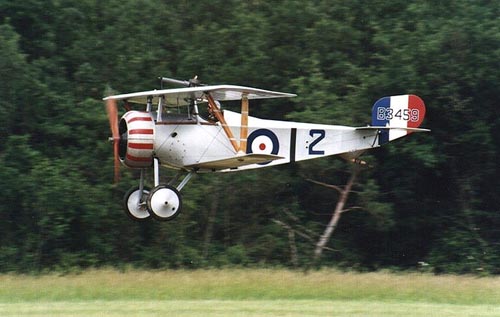
055 Nieuport 17 Scout Replica G-BWMJ

Nieuport 17/23 Scout Replica in the markings B’3459 Captain Philip Fletcher Fullard No.1 Sqn RFC Bailleul Aerodrome September 1917. Fullard shot down 17 enemy aircraft in this aircraft. Photographed at IWM Duxford. Source http://www.airmuseumsuk.org/

Philip Fletcher Fullard was born in May 1897. As a school boy he played as a centre half for Norwich City’s reserve team, but by 17th November 1917 at the age of , aged 20 he was one of the leading British fighter aces serving in No 1 Squadron RFC. Since joining No1 Squadron RFC in May 1917 he had shot down forty enemy aircraft. At that time only four fighter pilots had shot down more aircraft. Baron von Richthofen had shot down 60, Georges Guynemer 53, Werner Voss 48 and Albert Ball 44.

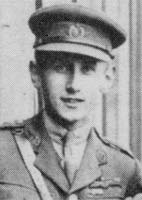
Philip Fletcher Fullard
Philip Fletcher Fullard (Image courtesy The Aerodrome)

He joined the army in 1915 after leaving King Edward VI’s Grammar School school Norwich and qualified as a pilot in December 1916. He was a natural athlete who captained his school’s Hockey and football teams. He had an aptitude for flying which was reflected inhis first appiontment as a newly qualified pilot – to instruct others during the spring of 1917. He joined No1 Squadron RFC in May 1917. His squadron flew what was by 1917 an an obsolescent aircraft, the Nieuport 17. With this he took on faster and more heavily armed enemy aircraft. Overt the Summer of 1917 he was part of the Allied air effort to secure air superiority over the Ypres Salient. Without air superiority Allied spotter aircraft could not find the enemy or spot artillery fire. Whatever the failings and costs of the 3rd Battle of Ypres, the air battle was a success for the Allied air forces.

His achievements as a fighter pilot did not go unrecognised. (1) He was awarded a the Military Cross, (MC) twice, and the Distinguished Service Order (DSO) The citations for these awards refer to his “conspicuous gallantry and devotion to duty when engaged in aerial combat.” The number of occasions on which he attacked and destroyed enemy aircraft; his fine leadership, great dash and determination to close with the enemy. His DSO recognised that “as a patrol leader and scout pilot he was without equal” and mentioned that “the moral effect of his presence in a patrol is most marked.” Not merely a fighter ace, but also a good leader.

Flying was difficult and dangerous, Fullard had some narrow escapes.(2) When fighting a German two-seater, his goggles were shot away from his eyes. The signalling lights in his machine caught fire and set the woodwork of the aeroplane alight. Fire must have been one of the nightmares of the era before parachutes were worn, and faced with the choice of jumping to your death or being burned alive. On this occasion Fullard managed to get his burning machine back to the British lines

On the 17 November 1917 he broke his leg playing football for the squadron against an infantry battalion and took a year to recover. This compound fracture ended his career as a footballer and as a fighter pilot. By the end of the war his total of 40 kills had been eclipsed by British pilots such as Mannock, 61 kills, McCudden; 57 kills , McElroy; 47 kills and Hazell, 43 kills. (3)

nieuport_17_B3459_02_500
Another photograph of replica Nieuport 17, B3459

However, even by the time his fighting career had ended Guynemer, Voss, Ball were already dead and by the end of the war, von Richthofen, and November 1917 by the end of the Great War von Ricthofen, Mannock, McCudden , McElroy were all dead as well. Philip Fullard was the second highest scoring British ace to survive the Great War. The footballing injury which ended his career, it also may have saved his life. While Fullard does not attract the same attention as other sportsmen who fought in the Great war, flying as a fighter pilot was statistically more risky than winning a VC.

Fullard stayed in the Royal Air Force after the end of the Great War and rose to be an Air Commodore, serving as a staff officer and commander in the Second World War. He retired form the RAF in 1949 and died in 1984. This may make him unique footballing statistic for a second reason. As well as being the only man who have played football for a for a second reason. As well as being the only fighter ace who played football for an English League club, he might also be the footballer who has achieved the highest rank in the armed forces.

Airpower tours logo_R131_G202_B255
Airpower Tours

One Man Went To Meaux…


Interior Museum of the Great War

The Museum of the Great War, Pays de Meaux, is in the Town of Meaux, pronounced “mow”- to rhyme with “toe”. This, the first French National museum dedicated to the Great War 1914-19, is one of the big investments by the French government to commemorate the Centenary and cost 28 million Euros.

It is sited a short distance East of Paris, close to Disneyland, on the 1914 battlefields of the Marne. Close by are the places where French troops deployed by Paris Taxis. The BEF withdrew through Meaux towards the end of the long retreat from Mons. It’s a short distance from the sites of the scattered engagements that made up the 1914 battle of the Marne and not too far from where the French and American troops halted the Germans in 1918.


French infantry in 1914

The battles that take place in the Marne are very important parts of the Great War. They are the turning points of the war, where the Germans were beaten back in 1914 and in 1918. There are narratives to be told about how the British Army saved Paris, France and Europe in 1914 and how the Americans saved Paris , France and Europe in 1918. It is also a place to hear about the French Army of 1914 and the battle to save Paris, to contemplate the French sacrifices for their country from 1914-18.

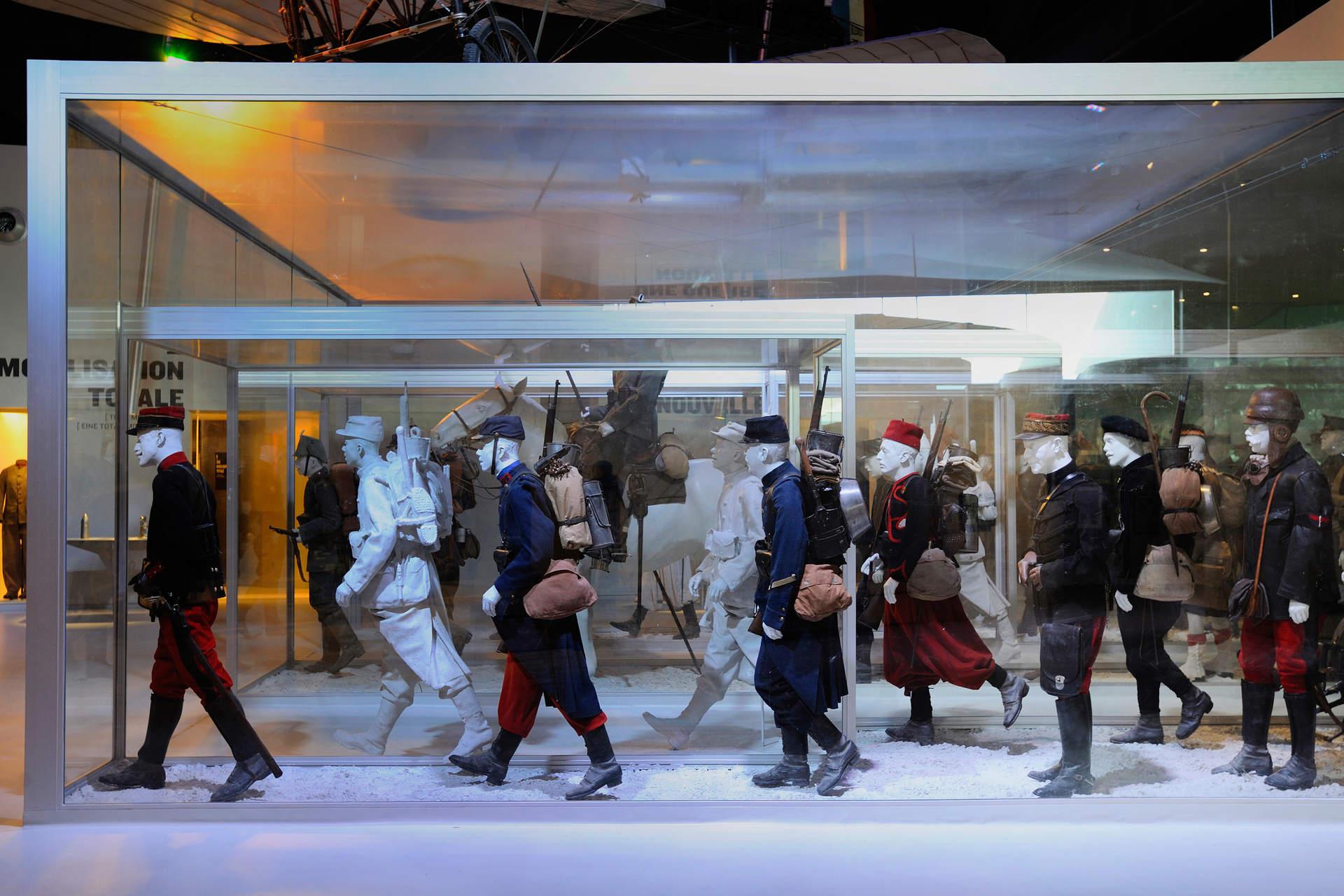
The Great War Museum at Meaux is very good as a “Museum of History and Society”. It is a museum about the Great War as seen by the French. It is not an interpretation centre for the battlefields in the area. It is based around the collection of Jean-Pierre Verney, which is particularly strong in the artefacts from the American Army, the AEF. It has a few big pieces of equipment, mainly selected to illustrate the contrast in technology between 1914 and 1918; pigeons and wireless, a Paris Taxi and a Renault tank. A lot of thought has gone into the interpretation, and I was particularly impressed by the way they have designed the exhibits to be experienced by the blind. Thus there are handling collections throughout the museum. Cases with manikins displaying uniforms and equipment are supported by statues extending out of the display case for people to feel the the shapes.

It’s not without its limitations. It is not geared towards telling the story of the British or Americans in France. and while exhibits are labelled in French English and German, there is no English language guide book or supporting materials for British or English speaking schools visitors. The collection lacks many of the kinds of pieces with historic provenance that are the highlights of the Imperial War Museum. It has no equivalent of the battered gun and limber from F Sub of L Battery, nor the gun served by Jack Cornwall.

Charles_peguy
Charles Péguy

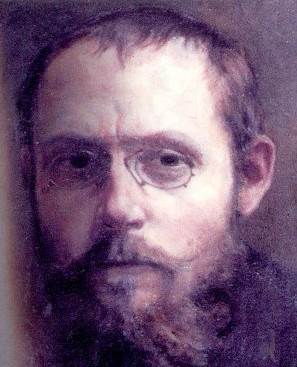
One of the casualties of the battle was the French philosopher and poet Charles Péguy, killed in action on 5th September 1914 by German rifle fire near Villeroy. He is buried in a mass grave on the battlefield. One account says that he was killed because he would not take cover but stood up encouraging his men in the firing line. He was an established poet like Rupert Brooke. He had been a protester, socialist, anti-cleric, catholic, philosopher and poet. T. S. Eliot commended him as “one of the most illustrious of the dead who have fallen in this war,… a national, a symbolic figure, the incarnation of the rejuvenated French spirit.” It is claimed that he influenced Mussolini and Graeme Green. Much of his work has not been translated into English. Read more at http://en.wikipedia.org/wiki/Charles_P%C3%A9guy

David Campbell
David “Soarer” Campbell

If Charles Peguy was a special type of intense, intellectual Frenchman hard to envisage as a British hero, then David Graham Muschet “Soarer” Campbell is a Briton straight out of an Edwardian adventure story. A professional solider and amateur sportsman, he played cricket and polo well and won the 1896 Grand National riding “The Soarer”, from which he gained one of his nicknames. Twice wounded in the Boer War, he was the commanding officer of the 9th Lancers in 1914. On 24th August at Elouges, he led his Regiment in a charge over sugar beet fields in the industrial landscape outside outside Mons at the start of the Retreat. On 6th September 1914, the day after Peguy died, at Montcel 35km south east of Meaux, Campbell led two troops of the 9th Lancers to overthrow a squadron of the German1st Guard Dragoons, in what was the start of the BEF’s advance on the Marne. The Regiment’s doctor found Cambell “sprawled in a patch of clover a revolver wound in his leg, a lance wound in his shoulder, and a sword wound in his arm”. Despite this, Campbell told the doctor “I’ve just had the best quarter of an hour I’ve ever had in my life! Four months later Campbell returned to the BEF to command a cavalry brigade and was wounded a further time in May 1915 by the same shell which mortally wounded the poet Julian Grenfell. He survived his wounds to command the 21st New Army division on the western front, as a far from stereotypical British general officer.

The Marne area was never as devastated as the Somme, Aisne or Artois and many of the villages retain buildings from the time. One of the village cemeteries has the loopholes where the soldiers of the 45th Algerian Division fortified themselves. It is easy to see how the fighting unfolded. The fighting in the Marne was very different from the trench warfare that is normally associated with the Great War. It was a war of manoeuvre and cavalry charges. There are great stories about the people who fought that can make this tale of interest to a general British or American audience. But it needs a battlefield guide who can bring history to life from a British or US point of view.   

Villeroy Mass Grave

The Other British “Private Ryan” – Meet Fred Dancocks and His Brothers

Private Fred Dancox VC

Private Fred Dancocks of the Worcestershire Regiment was an unlikely hero. He was a middle aged man in 1917, a father of five children, from a large family of labourers who lived in the poorer parts of Worcester City. He was baptised in 1878, the middle of three sons. Two years later his father died and his mother remarried a William Whittle, who already had two sons from his first marriage, and they had further children. From the age of 18 Fred lived with Ellen, and they had five children, one which died in infancy. His occupation was “Hay Trusser” which seems to have been seasonal labouring work. When war broke out he joined the army, and shortly afterwards married Ellen, enabling her and the children to access the benefits, such as they were of an army wife. When he joined his name was recorded as “Dancox” in error, which is the name entered which he is referred in the military records. (1)

There seems to have been no reason for him to have been preparing to go over the top with the 4th Battalion the Worcestershire Regiment on the 9th October 1917 near Langemarck in Belgium. Fred had already done his bit, joining the battalion in Gallipoli in September 1915, and since then serving for over a year in France. His battalion formed part of the “Incomparable” 29th Division, which had participated in many of the most bloody battles of the Great War. After Gallipoli the 29th Division, and the Worcesters with them served two tours on the Somme. Their red triangle is prominent at Newfoundland Park on the Somme and the Division had already taken part in two “big pushes” in 1917; at Arras in the spring and at the capture of Langamarck in August.

Private Fred – known by his nickname of “Dando” was the HQ Company sanitary orderly – the man who emptied the lavatories. This was an essential   but undistinguished task, and one which could have kept him from the worst dangers. However, Fred Dancock had apparently volunteered to join the attack and was to the “mopping up party”. This party of ten men would search each captured position to make sure that there were no enemy hiding and able to shoot the advancing allies in the back.

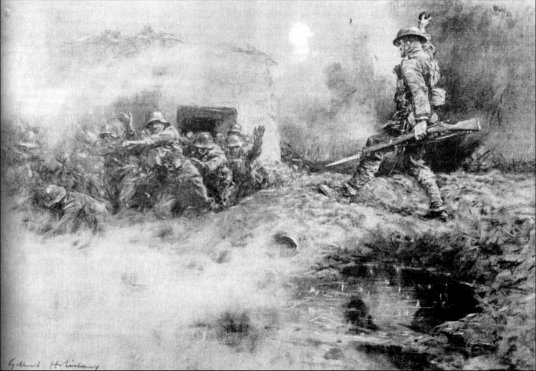
As the battalion advanced it came under fire from a machine gun in a bunker, which had not been hit by the barrage, close to the railway bridge over a road at Namur Crossing. A belt fed machine gun could fire 550 rounds a minute, nine shots a second, creating a wall of steel across the front of the battalion. By 1917 the army had learned lots of lessons, and the battalion halted while mortars were brought up to deal with the bunker. But before the mortars could be brought up, the fire of the machine-gun suddenly stopped. A minute later every man within sight was on his feet cheering and laughing, for stumbling through the mud towards the British line came a little crowd of the enemy with hands raised in surrender, and behind them came a solitary British soldier, labouring along under the weight of a machine-gun—the machine-gun. The cheering grew as he was recognised: “Dancox!” the troops shouted, “Good old Dando !”(2) Fred hadn’t heard the order to halt. He had continued to advance, working his way from shell hole to shell hole until he was behind the German bunker. He then went to the back door and walked into it holding a hand grenade and motioning for the Germans to leave – which they did.(3)

The above painting by Gilbert Holiday shows Private Dancox holding his bomb ready to throw as he orders his prisoners off to our lines. This painting is in the possession of the Regiment

Fred Dancocks’ courage was recognised with the award of the Victoria Cross. His was the first VC to a man from Worcester. He wrote home to say that he was given leave to return home and receive the medal from the King on the 30th November. Worcester prepared to celebrate the homecoming of the local hero in style: bunting was put up and alongside the Dancox family waited civic dignitaries, reporters, and hundreds of local people. He did not arrive.

Only a few weeks after the attack on 9th October, his unit took part in the attack at Cambrai on 20th November, and before he could take his leave, the Germans had counter-attacked. Fred Dancocks was killed by a a shrapnel ball to the head. His body was never found and hie is commemorated on on Panel 6 at the Cambrai Memorial, Louverval. (4)

Fred was not the first of his family to die in the Great War. His older brother William Dancocks was a regular soldier in the 3rd Battalion the Worcestershire Regiment and was killed on the 23rd October 1914, in the fighting East of Neuve Chapelle, one of six men from that unit to die on that day. He has no known grave and is commemorated on the Le Touret memorial to the Missing . (5) His younger step-brother, Thomas Whittle was killed on the Somme on 21st August 1916, serving with 1/7th Battalion The Worcestershire Regiment. He has no known grave, and is commemorated on the Thiepval Memorial a few hundred metres North of where his battalion fought on the day he died.(6)

Four months after Fred died his younger stepbrother, William Whittle was killed in the battle in defence of Amiens on 31st March 1918, serving with 2/8th Battalion the Worcestershire Regiment. This was another bad day for his battalion, as 37 men died that day in the less known 1918 battle of the Somme.. He has no known grave and is commemorated on the Pozieres memorial on the Somme.  (7)

Another brother, Henry Dancocks, survived the war having served alongside Fred in the 4th Battalion the Worcestershire Regiment.

That left Ellen with three dependent children in a world before the welfare state. King George wrote to Ellen to express his sincere regret that Fred’s death had denied him “the pride of presenting to him in person the Victoria Cross.” The City of Worcester established a public fund for Ellen Dancox, and made an initial donation of £50. In February 1918 the council minuted that ‘subscriptions were not coming in very satisfactorily’, but eventually a total of £451 was subscribed (which, in 2007, would have had the purchasing power of over £15,000). .The city council bought the medal from the family. Their house in Bull Entry was demolished in a slum clearance programme during the 1930s.

Besides the VC, Fred Dancocks and his brothers represent a loss as significant to their families as the Johnson’s reported in the Mail or the Niland Brothers whose story inspired the plot of Saving Private Ryan or the fighting Sullivans. The fact that none of these men has a known grave makes their fate particularly poignant. Yet relatively few people hear of or commemorate the Fred Dancocks and his brothers.

Dancox House, a sheltered accommodation facility in Worcester city centre, is named after him. In 2006 the Worcester and Herefordshire branch of the WFA erected a memorial to Fred Dancox VC close to Namur Crossing. It is only a short detour from the German cemetery at Langemarck. I first heard the story of Fred Dancocks and his brothers from Major John Cotterill who has championed the cause of the memory of the Worcesters for as long as I have known him and am grateful to him and for the work carried out by the Regiment by the local community for the information in the links which are the sources for this tale, which is worth telling and sharing.

Walter Flex and his Rushing Wild Geese

Walter Flex (wikipedia)

Poetry and music are very much part of the British story of the Great War. But what did the Germans sing?

I found Walter Flex in “The Lost Voices of Word War One, An International Anthology of Writers, Poets and Playwrights,” by Tim Cross. (Bloomsbury) ISBN 0-7475-0276-5 Flex said he wrote it whist on sentry duty in Lorraine, and it was first published in 1916  in his book “Between two Worlds“

1.Wildgänse rauschen durch die Nacht
Mit schrillem Schrei nach Norden –
Unstäte Fahrt! Habt acht, habt acht!
Die Welt ist voller Morden.

2.Fahrt durch die nachtdurchwogte Welt,
Graureisige Geschwader!
Fahlhelle zuckt, und Schlachtruf gellt,
Weit wallt und wogt der Hader.

3.Rausch’ zu, fahr’ zu, du graues Heer!
Rauscht zu, fahrt zu nach Norden!
Fahrt ihr nach Süden übers Meer –
Was ist aus uns geworden!

4.Wir sind wie ihr ein graues Heer
Und fahr’n in Kaisers Namen,
Und fahr’n wir ohne Wiederkehr,
Rauscht uns im Herbst ein Amen

This is translated as

1. Wild geese are rushing through the night,
With shrill cry, northbound rangers.
Hazard awaits, take care your flight
And world is full of dangers.

2. Fly through the night-filled air my friends,
You squadron grey and mighty.
Dawn breaks as battle cry extends
Far o’er the lands below ye.

3. Fly on, rush on, you grey-winged flight,
Rush on to Northlands safety.
When you fly south again some night,
What will my fate have made me?

4. We are, as you, a gray-clothed pack,
The Kaiser’s fighting yeomen.
Should our flight end with no way back,
Fly south and sound our Amen.
Tr. Frank 2002 http://ingeb.org/Lieder/wildgans.html

There are parallels with Flanders Fields in that it was written in the field and contrasts the war with nature. It touched a Germanic nerve for romanticism when coupled with the tune by Gotz and is claims to be the most popular soldiers song of the German army of the Great War.

https://www.youtube.com/watch?v=fz9aO1j0u1E

After the Great war the song was adopted by the Wandervogel movement of ramblers and hikers and other youth organisations – and the the Hitler Youth. It was a standard of the German soldier-songbooks of the Wehrmacht – with the references to the Kaiser changed..

The same song passed across frontiers. and has been adopted by French youth movements and the French Army’s airborne forces

and the school of quartermasters!

http://www.youtube.com/watch?v=KQSX5NRZ7d4

French Lyrics here:-  http://musique-militaire.fr/parachutistes/les-oies-sauvages

Of course the song fits the ethios of the Franco-German Corps

Is there any other song of the Great War which is still sung?

The Gunners who supported the Bayonet Charge that saved the British Army

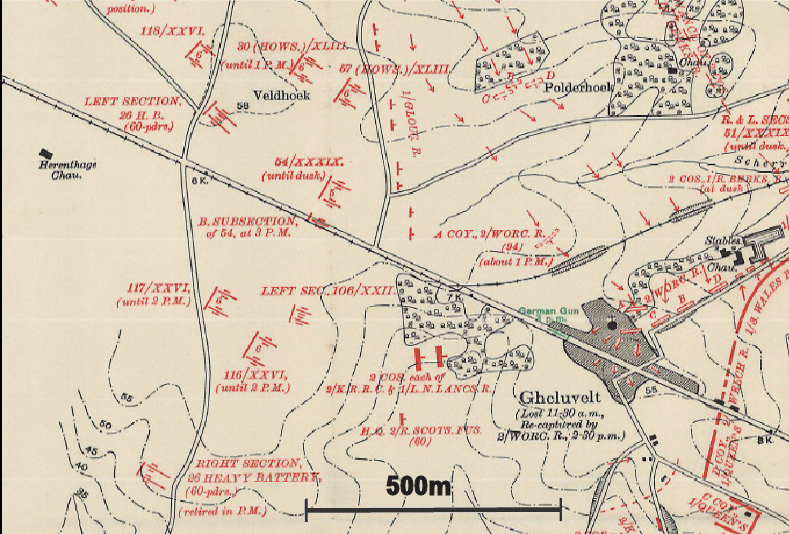
The Defence of Gheluvelt. - The Critical Day 31st October. Detail of a map compiled for the Official History of the War to accompany Military Operations, France and Belgium, 1914, Volume II
The Defence of Gheluvelt. – The Critical Day 31st October. Detail of a map compiled for the Official History of the War to accompany Military Operations, France and Belgium, 1914, Volume II

For ten years from 2000 -2010 every soldier who joined the army as an senior entry soldier took part in a Realities of War Tour to Ypres (modern Ieper) in Belgium. A whole generation of soldiers will have heard of the story of “the bayonet charge that saved the British Army.”, made by the 2nd Battalion the Worcester Regiment,  Far fewer will be aware of the gunners who supported them.

On the 31st of October the Germans Army nearly won the First World War. They had assembled an overwhelming force of artillery and battered a hole in the British front line East of Ypres at a village called Gheluvelt, on the road between Ypres and Menin, the Menin Road. The only British reserved were the 2nd Battalion the Worcester Regiment, and they mounted a gallant bayonet charge which stopped the Germans and allowed the British line to recover, but at the cost of one third of their number.

But they did not do this alone. They were supported by the Gunners, and in particular by a heroic and skilful action by 54 Dragon Battery, which was one of the batteries which became 129 Dragon Battery, currently part of 4th Field Regiment Royal Artillery.

The map from the Official History of the War in France and Flanders shows a part of the battle of Gheluvelt. It shows German guns at the Western end of Gheluvelt and the position of 54 Battery ­

According to an infantry officer nearby “Lt Blewitt of 54 Battery came up to say to his battery commander that the Germans appeared to be bringing a gun to the barricade in the middle of Gheluvelt and asked permission to take an 18 pounder onto the road and deal with it. Having got permission, he manhandled the gun onto the road. The German gun fired first and missed. Blewittt did not give them a second chance. He put a stop to any trouble from that quarter for the rest of the afternoon. If the Germans had pushed home their attack during the afternoon there was nothing to stop them.”” Lt Blewitt was awarded the DSO for this action. His letters are in the Imperial War Museum archives. At the time his letters home gave no hint to his family and fiancé of the dangers he ran or his heroic and skillful acts.

Three years later, while a Gunnery instructor on England, he was persuaded to write about the circumstances which led to his award for gallantry. He wrote “My layer at the time was Bombardier Steel, whose efficiency I think solely we all – the detachment and I , owe our lives. The detachment as far as I can remember was: Sergeant, now (1917) BSM Howes, a sturdier man than whom never stepped, as No 1, Bombardier Steel, layer,. Bombardier Priestley, (killed a few days later1), No 6, while think Gunners Hobson and Delamere,(Both at later times my servant, the first wounded by a French battery few days later, and the latter gassed as a sergeant in the battery this year). Made up the crew. Who the last man was I can’t remember, but a damn fine crowd they were, every one of them.”

The German infantry in Gheluvelt. was the 16th Bavarian Reserve Regiment, most famous for one its soldiers, the 19 year old Adolf Hitler. . .

1Gunner (Local Bombardier?) Alfred Priestley, husband of Nancy Priestley of Preston is commemorated on the Menin Gate.

See where this happened and contact Gunner Tours!

gunner tours logo white on brown