Tag Archives: Great War

Why Walter Tull matters: why he should not get an MC – and a better cause for the campaigners

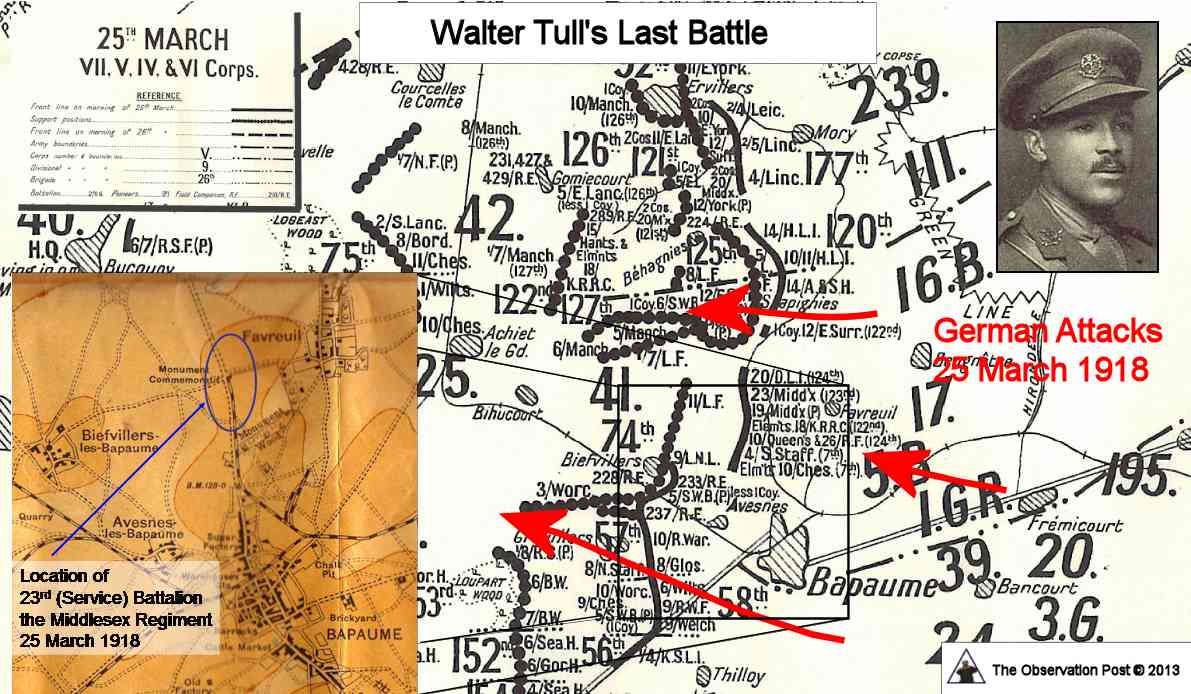
Walter Tull Map

Walter Tull was a man who is famous for being the first black outfield footballer to play in the Football  league and for overcoming the barriers of race and class to be commissioned as an officer in the Infantry in the British Army in the Great War.

In recent decades he has been championed as a historic hero and a role model for young black Britons. Philip Vassili has championed his memory, written a biography and a play and led a call for him to be awarded a posthumous Military Cross.
­
I first spoke to Philip Vassili in 2007 when I was researching Walter Tull for a­ visit to the battlefields of the Western Front by Henry Compton School, Fulham. This school had won funding from the TV show “Fortune: Million Pound Giveaway” to visit the Battlefields of the Great War. Duncan Bannatyne had said that these students would get nothing from a visit to the battlefields, but the deciding support was from Lord Archer.

Here is the show


And here is a video made by the boys themselves.  The video originally had an audio soundtrack – but its been disabled for copyright reasons.

Bishop Henry Compton School in Fulham was a school for boys aged 11-16. It was founded as a board school in the last quarter of the nineteenth century. The then Head of History Dan Lyndon showed me the records from the Great War. In the early years of the 20th Century the school educated boys to start their working lives in crafts and trades. Dan told me that he wanted to follow the stories of the ex pupils and teachers from their school. (One of the school’s alumni was awarded a VC for his actions in Burma in 1944, but that is another story). Dan also wanted to follow the story of Walter Tull, who the boys studied in Black British Month, as a focus for the key stage 3 topics on trench warfare.

Henry Compton School was a school that white middle class parents would spend tens of thousands in school fees or hundreds of thousands on a house to avoid. 30 different languages were spoken by the students attending the school, which had no sixth form. Many of the boys were refugees from across the zones of modern conflict, including four Afghans, a Palestinian and a Libyan. The boys were not angels. One came with a personal minder. However, this was not a failing school. The staff were very impressive. The teachers were committed and passionate about their subjects and students. Mr Ranji the Headmaster came on the tour and had a way of saying something very quietly that turned some boisterous or stroppy teenager into docility itself – a kind of “thug whisperer”.

The personal stories of some of the boys made an impression on me. The mother of one the Afghan boys clearly hadn’t understood what the trip offered and dispatched her son with a four day supply of kebabs and rice. I asked another whether his family were planning to go back to Afghanistan. The boy told me that his uncle had been and said that all was there was the trace of the house in the dust. When one boy asked me why the big hole in the ground was called a mine because where he was from mines are things you mustn’t stand on. I had to turn away for a minute. It brought it home to me how fortunate I am as a British parent that whatever dangers my children face growing up in London, anti-personnel mines aren’t one of them.

We visited the Western front to look at the soldiers’ experience of the war. We visited museums and trenches, did a bit of re-enactment. The school played along and organised themselves as sections of “the Fulham pals” platoon. We played a bit of military discipline with sections competing to be the first “On parade” We made some local connections to Fulham. We found the graves of a student and a teacher who were on the school’s roll of honour. We visited Hill 60 where a Fulham boy, Edward Dwyer, born a few streets from the school, had carried out the deeds for which he was awarded the Victoria Cross.

The one question that everyone wanted to know the answer to was “What did people like me do in the First World War?” The Menin Gate supplied a lot of answers with the names of soldiers from all over the Indian subcontinent and the West Indies. The Indian army memorial to the missing, the Portuguese cemetery at Neuve Chapelle and Russian graves in Arras supplied other links. Some boys made a bee line for the computer terminals at the Thiepval memorial to search for their own names on the Commonwealth War Graves Database. The Libyan boy proudly showed me the record that revealed that someone of his name had died serving Britain in the Libyan Frontier force in 1941. Was this tokenism? It was obvious that these were only tiny exceptional examples among the massed ranks of the Great War dead. No one can pretend that Britain of the Great War was as diverse as it is now, but there is a big psychological difference between “someone like me” and “no one like me”.

The boys were fascinated by Walter Tull. They had learned about him in lessons. As a footballer and soldier he was a hero and they obviously identified with him and his story. We visited the memorial to the Missing at Arras, and found Walter Tull’s name. They held a minute’s silence and one of the boys read the details of the CWGC reference.


We also found the area where he was killed in March 1918. The Regimental History mentioned that his unit was sited around the monument to the 1870 battle.


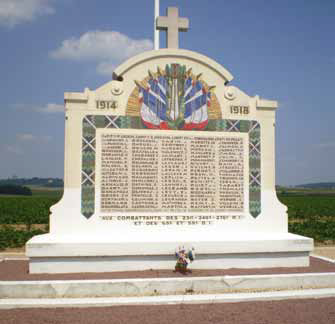
1870-71 memorial near Bapaume

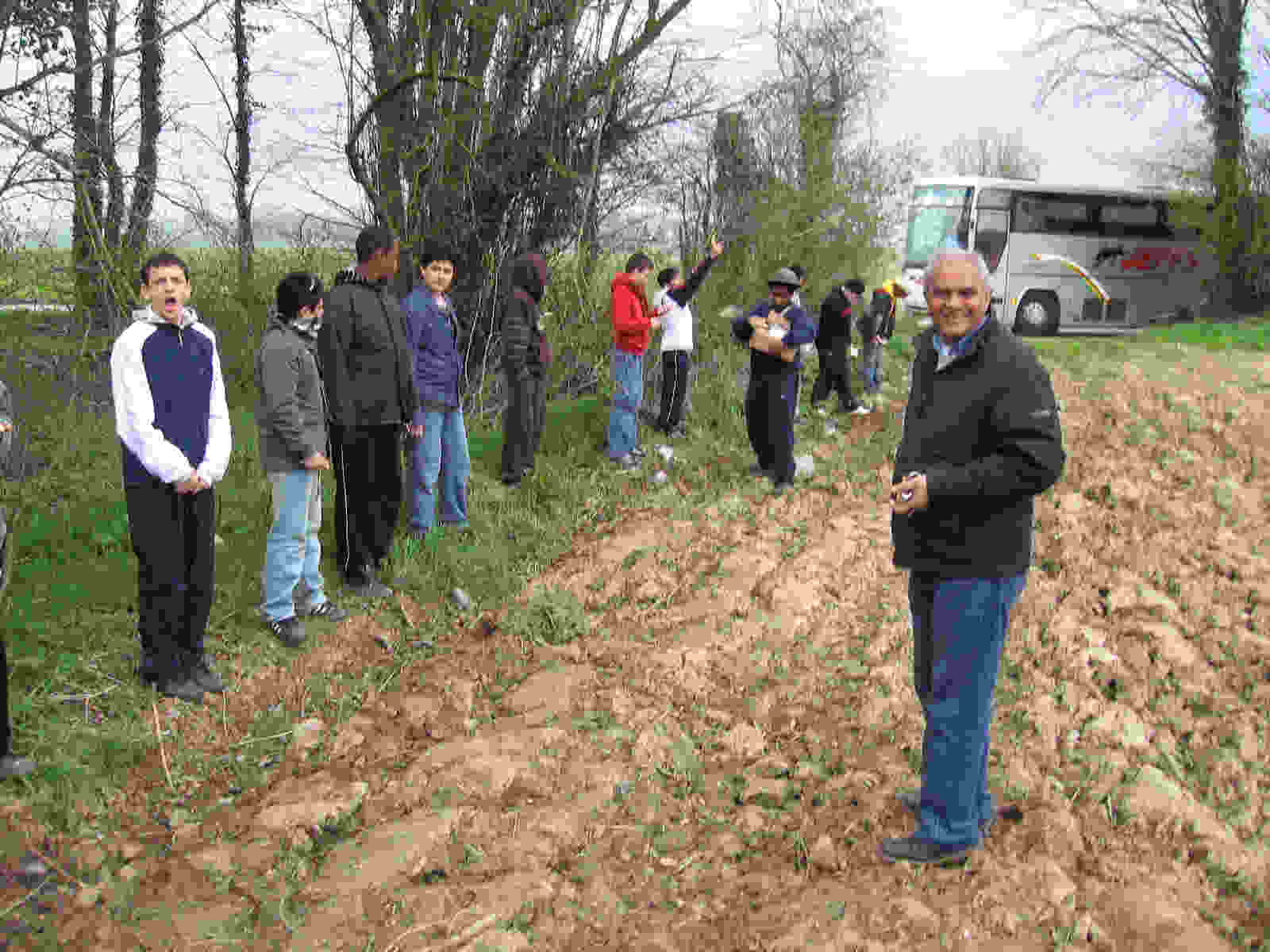
We held an act of Remembrance in a field across the road from the memorial. It is not a precise location, but it has to be within a few hundred metres and Tull’s body has never been discovered. The boys laid crosses, stars of David and crescents, which were still there  a couple of years ago
ww1 battlefields 28-31.3
Students from Bishop Henry Compton School prepare for an Act of Remembrance close to the spot where Walter Tull fell on 25th March 1918. Note Headmaster in Foreground and the “Platoon Sergeant” in the background distributing crosses, stars of David and crescents.

Did they get much from the tour? They were certainly engaged and asked some very lively questions of me and local guides and speakers. Some of the discussion put me as the guide on the spot. I vividly recall being asked about whether the Germans were anti-semitic in the Great War and the part that the Great War played in the rise of Hitler and the Nazis. One of the major benefits was in terms of citizenship objectives. Taking part in an trip to a foreign country behaving yourself in restaurants and hotels is all part of being a good citizen. These boys were good ambassadors of their school and created a positive impression with the people they met. Individual identity is an issue, and one of the objectives was to explore the story of Londoners in the Great War. At the end of the Tour the answer to the question “are you proud to be Londoners” was answered with a massive roar. Had this been 1914 this generation of “Fulham Pals” would have done their bit.

These boys didn’t ask to be brought up in London, yet must live in a society where at least some people are asking the question “what is your right to be here?” The answer “Because someone like me died for this country” is a powerful argument, and one that these boys had witnessed. These boys will now be in their twenties. Many of them are young black or Moslem men, two groups that are perceived as being most at risk of falling under the influence of criminal subculture or of Islamic extremism. The story of Walter Tull matters because he is a symbol and a role model that shows it is possible to succeed and cross the barriers of race and background.

You can see the boys and their tour for yourself. Only the first part of this video is available on Youtube. The film was shot by the boys themselves and edited by Dan Lyndon. The second half which included the visit to the site of his last action and the Arras memorial isn’t available publicly.

Walter Tull in the Great War

During the First World War Tull served in both Footballers’ Battalions of the Middlesex Regiment, 17th and 23rd, rising to the rank of sergeant and fighting in the Battle of the Somme in 1916. When Tull was commissioned as Second Lieutenant on 30 May 1917 (still in the Middlesex Regiment),he became the first black/mixed race combat officer in the British Army, despite the 1914 Manual of Military Law specifically excluding Negroes/Mulattos from exercising actual command as officers. He fought in six major battles: Battle of Ancre, November 1916 (first Battle of the Somme); Battle of Messines, June 1917; 3rd Battle of Ypres, July–August 1917 (Passchendaele, Menin Road Bridge); September 1917; Second Battle of the Somme, St.Quentin, March 1918; Battle of Bapaume, March 1918 (2nd Somme).

Walter Tull is remembered at the Arras Memorial, Bay 7, for those who have no known grave.

Another interesting fact about Walter Tull is that his brother also triumphed over barriers of class, birth and race. The two brothers were separated on the death of their father. Their mother died, and the father remarried. On his death the step-mother put both boys into orphanages. Walter ended up in the East End of London, Edward in Glasgow. Walter became England’s first professional outfield footballer while Edward became Glasgow’s first black dentist. Its remarkable that both brothers joined the officers mess/professional classes having a background in an orphanage, without any consideration of race. The Tull boys’ success says much about them and for the care offered by the orphanages which brought them up. That is the story which has been missed.

Why Walter Tull Should Not be Awarded a Posthumous Military Cross

The campaign for him to be awarded a posthumous Military Cross is misguided and misplaced. Walter Tull was an admirable man and is deservedly a role model. He was a victim – but principally of violent death at the hands of the Kaisers Army. Portraying him as the victim of racism because he did not get a gallantry award is a slur on his parent Regiment. The Middlesex Regiment deserve credit for making an exception to the discrimination institutionalised in Kings Regulations and commissioning him.

It would be a mistake to retrospectively honour Walter Tull because of his race. .Walter Tull is far better known than any of the 37,000 officers awarded the Military Cross during the Great War. How many people can name any MC holders?  There was no bar to non European officers or soldiers from receiving awards, such as the DFC awarded to  Lieutenant Indra Lal Roy, the Indian air ace or the VC to Mir Dast, the Indian Army Officer. Walter Tull was one of the countless brave men who were not awarded a medal for bravery.  It is far better, in our celebrity obsessed times, to use Tull’s story as a reminder that the awards systems are imperfect. The exhortation is to Remember them –   all and unreservedly .   
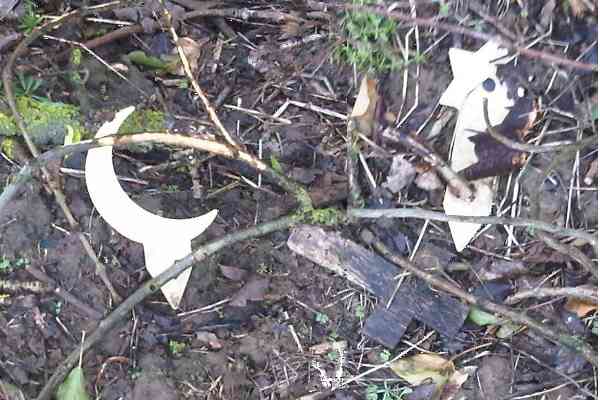
Old symbols of remebrance

Some Better Causes for Moral Outrage

There are other more notable victims of racism from the Great War than Walter Tull. The Chinese and South African labourers, recruited on contractual terms which bordered on slavery. The non-European students in England denied the opportunity to serve as British officers are more deserving of sympathy. These include Fijian hero Ratu Sir Lala Sukuna Rahave, wounded while serving in the French Foreign Legion and Lt Hardutt Singh Malik, initially refused a commission in the Royal Flying Corps.

The campaigners should also consider some other aspects of the Walter Tull story. Walter Tull lived at a time when only a small proportion of the population could vote, and before there was much of a welfare state. What proportion of the alumni from Britain’s modern care system currently join the officers mess, university or the professions?

A second issue arises from the comparison between the Board school that stood in Kingwood Road, Fulham and the schools on that site now.  The Board school was geared towards a technical education that would send its alumni into craft and mechanical jobs in the working world.  To what extent have the changes of the last decade done anything to help the boys who do not expect to go to university?  Or has the drive for parental choice through Academies and Free Schools make it easier to ignore them?
baldwin battlefields logo


Philip Fullard: The“highest scoring” footballer of the Great War.

055 Nieuport 17 Scout Replica G-BWMJ

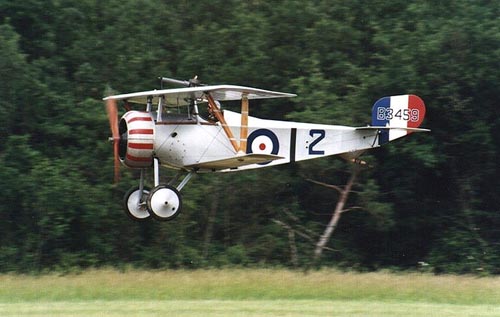
Nieuport 17/23 Scout Replica in the markings B’3459 Captain Philip Fletcher Fullard No.1 Sqn RFC Bailleul Aerodrome September 1917. Fullard shot down 17 enemy aircraft in this aircraft. Photographed at IWM Duxford. Source http://www.airmuseumsuk.org/

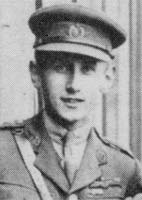
Philip Fletcher Fullard was born in May 1897. As a school boy he played as a centre half for Norwich City’s reserve team, but by 17th November 1917 at the age of , aged 20 he was one of the leading British fighter aces serving in No 1 Squadron RFC. Since joining No1 Squadron RFC in May 1917 he had shot down forty enemy aircraft. At that time only four fighter pilots had shot down more aircraft. Baron von Richthofen had shot down 60, Georges Guynemer 53, Werner Voss 48 and Albert Ball 44.

Philip Fletcher Fullard
Philip Fletcher Fullard (Image courtesy The Aerodrome)

He joined the army in 1915 after leaving King Edward VI’s Grammar School school Norwich and qualified as a pilot in December 1916. He was a natural athlete who captained his school’s Hockey and football teams. He had an aptitude for flying which was reflected inhis first appiontment as a newly qualified pilot – to instruct others during the spring of 1917. He joined No1 Squadron RFC in May 1917. His squadron flew what was by 1917 an an obsolescent aircraft, the Nieuport 17. With this he took on faster and more heavily armed enemy aircraft. Overt the Summer of 1917 he was part of the Allied air effort to secure air superiority over the Ypres Salient. Without air superiority Allied spotter aircraft could not find the enemy or spot artillery fire. Whatever the failings and costs of the 3rd Battle of Ypres, the air battle was a success for the Allied air forces.

His achievements as a fighter pilot did not go unrecognised. (1) He was awarded a the Military Cross, (MC) twice, and the Distinguished Service Order (DSO) The citations for these awards refer to his “conspicuous gallantry and devotion to duty when engaged in aerial combat.” The number of occasions on which he attacked and destroyed enemy aircraft; his fine leadership, great dash and determination to close with the enemy. His DSO recognised that “as a patrol leader and scout pilot he was without equal” and mentioned that “the moral effect of his presence in a patrol is most marked.” Not merely a fighter ace, but also a good leader.

Flying was difficult and dangerous, Fullard had some narrow escapes.(2) When fighting a German two-seater, his goggles were shot away from his eyes. The signalling lights in his machine caught fire and set the woodwork of the aeroplane alight. Fire must have been one of the nightmares of the era before parachutes were worn, and faced with the choice of jumping to your death or being burned alive. On this occasion Fullard managed to get his burning machine back to the British lines

On the 17 November 1917 he broke his leg playing football for the squadron against an infantry battalion and took a year to recover. This compound fracture ended his career as a footballer and as a fighter pilot. By the end of the war his total of 40 kills had been eclipsed by British pilots such as Mannock, 61 kills, McCudden; 57 kills , McElroy; 47 kills and Hazell, 43 kills. (3)

nieuport_17_B3459_02_500
Another photograph of replica Nieuport 17, B3459

However, even by the time his fighting career had ended Guynemer, Voss, Ball were already dead and by the end of the war, von Richthofen, and November 1917 by the end of the Great War von Ricthofen, Mannock, McCudden , McElroy were all dead as well. Philip Fullard was the second highest scoring British ace to survive the Great War. The footballing injury which ended his career, it also may have saved his life. While Fullard does not attract the same attention as other sportsmen who fought in the Great war, flying as a fighter pilot was statistically more risky than winning a VC.

Fullard stayed in the Royal Air Force after the end of the Great War and rose to be an Air Commodore, serving as a staff officer and commander in the Second World War. He retired form the RAF in 1949 and died in 1984. This may make him unique footballing statistic for a second reason. As well as being the only man who have played football for a for a second reason. As well as being the only fighter ace who played football for an English League club, he might also be the footballer who has achieved the highest rank in the armed forces.

Airpower tours logo_R131_G202_B255
Airpower Tours

One Man Went To Meaux…


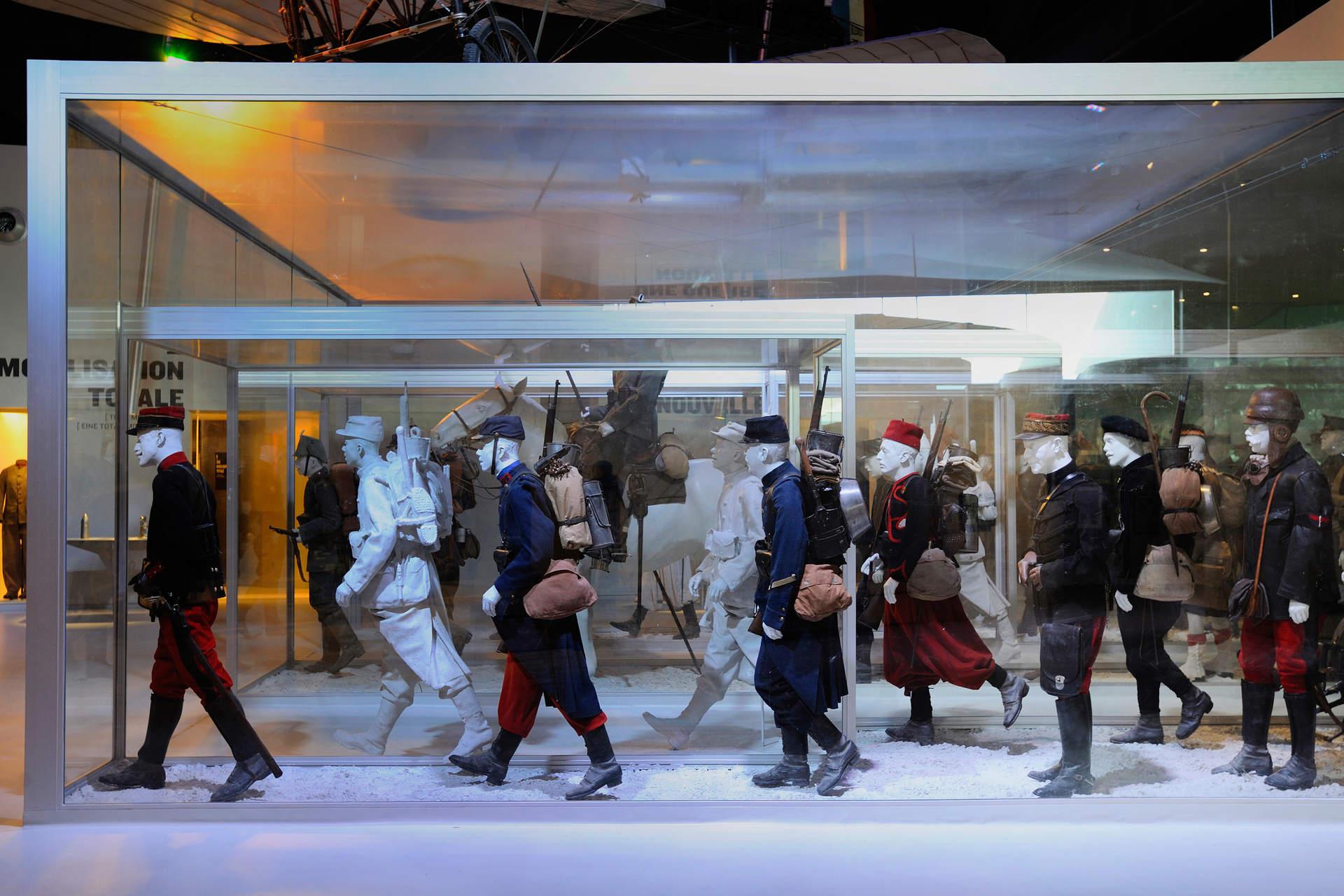
Interior Museum of the Great War

The Museum of the Great War, Pays de Meaux, is in the Town of Meaux, pronounced “mow”- to rhyme with “toe”. This, the first French National museum dedicated to the Great War 1914-19, is one of the big investments by the French government to commemorate the Centenary and cost 28 million Euros.

It is sited a short distance East of Paris, close to Disneyland, on the 1914 battlefields of the Marne. Close by are the places where French troops deployed by Paris Taxis. The BEF withdrew through Meaux towards the end of the long retreat from Mons. It’s a short distance from the sites of the scattered engagements that made up the 1914 battle of the Marne and not too far from where the French and American troops halted the Germans in 1918.


French infantry in 1914

The battles that take place in the Marne are very important parts of the Great War. They are the turning points of the war, where the Germans were beaten back in 1914 and in 1918. There are narratives to be told about how the British Army saved Paris, France and Europe in 1914 and how the Americans saved Paris , France and Europe in 1918. It is also a place to hear about the French Army of 1914 and the battle to save Paris, to contemplate the French sacrifices for their country from 1914-18.

The Great War Museum at Meaux is very good as a “Museum of History and Society”. It is a museum about the Great War as seen by the French. It is not an interpretation centre for the battlefields in the area. It is based around the collection of Jean-Pierre Verney, which is particularly strong in the artefacts from the American Army, the AEF. It has a few big pieces of equipment, mainly selected to illustrate the contrast in technology between 1914 and 1918; pigeons and wireless, a Paris Taxi and a Renault tank. A lot of thought has gone into the interpretation, and I was particularly impressed by the way they have designed the exhibits to be experienced by the blind. Thus there are handling collections throughout the museum. Cases with manikins displaying uniforms and equipment are supported by statues extending out of the display case for people to feel the the shapes.

It’s not without its limitations. It is not geared towards telling the story of the British or Americans in France. and while exhibits are labelled in French English and German, there is no English language guide book or supporting materials for British or English speaking schools visitors. The collection lacks many of the kinds of pieces with historic provenance that are the highlights of the Imperial War Museum. It has no equivalent of the battered gun and limber from F Sub of L Battery, nor the gun served by Jack Cornwall.

Charles_peguy
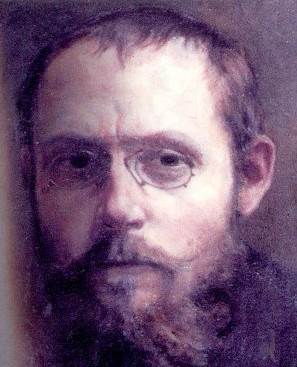
Charles Péguy

One of the casualties of the battle was the French philosopher and poet Charles Péguy, killed in action on 5th September 1914 by German rifle fire near Villeroy. He is buried in a mass grave on the battlefield. One account says that he was killed because he would not take cover but stood up encouraging his men in the firing line. He was an established poet like Rupert Brooke. He had been a protester, socialist, anti-cleric, catholic, philosopher and poet. T. S. Eliot commended him as “one of the most illustrious of the dead who have fallen in this war,… a national, a symbolic figure, the incarnation of the rejuvenated French spirit.” It is claimed that he influenced Mussolini and Graeme Green. Much of his work has not been translated into English. Read more at http://en.wikipedia.org/wiki/Charles_P%C3%A9guy

David Campbell
David “Soarer” Campbell

If Charles Peguy was a special type of intense, intellectual Frenchman hard to envisage as a British hero, then David Graham Muschet “Soarer” Campbell is a Briton straight out of an Edwardian adventure story. A professional solider and amateur sportsman, he played cricket and polo well and won the 1896 Grand National riding “The Soarer”, from which he gained one of his nicknames. Twice wounded in the Boer War, he was the commanding officer of the 9th Lancers in 1914. On 24th August at Elouges, he led his Regiment in a charge over sugar beet fields in the industrial landscape outside outside Mons at the start of the Retreat. On 6th September 1914, the day after Peguy died, at Montcel 35km south east of Meaux, Campbell led two troops of the 9th Lancers to overthrow a squadron of the German1st Guard Dragoons, in what was the start of the BEF’s advance on the Marne. The Regiment’s doctor found Cambell “sprawled in a patch of clover a revolver wound in his leg, a lance wound in his shoulder, and a sword wound in his arm”. Despite this, Campbell told the doctor “I’ve just had the best quarter of an hour I’ve ever had in my life! Four months later Campbell returned to the BEF to command a cavalry brigade and was wounded a further time in May 1915 by the same shell which mortally wounded the poet Julian Grenfell. He survived his wounds to command the 21st New Army division on the western front, as a far from stereotypical British general officer.

The Marne area was never as devastated as the Somme, Aisne or Artois and many of the villages retain buildings from the time. One of the village cemeteries has the loopholes where the soldiers of the 45th Algerian Division fortified themselves. It is easy to see how the fighting unfolded. The fighting in the Marne was very different from the trench warfare that is normally associated with the Great War. It was a war of manoeuvre and cavalry charges. There are great stories about the people who fought that can make this tale of interest to a general British or American audience. But it needs a battlefield guide who can bring history to life from a British or US point of view.   

Villeroy Mass Grave

The Other British “Private Ryan” – Meet Fred Dancocks and His Brothers

Private Fred Dancox VC

Private Fred Dancocks of the Worcestershire Regiment was an unlikely hero. He was a middle aged man in 1917, a father of five children, from a large family of labourers who lived in the poorer parts of Worcester City. He was baptised in 1878, the middle of three sons. Two years later his father died and his mother remarried a William Whittle, who already had two sons from his first marriage, and they had further children. From the age of 18 Fred lived with Ellen, and they had five children, one which died in infancy. His occupation was “Hay Trusser” which seems to have been seasonal labouring work. When war broke out he joined the army, and shortly afterwards married Ellen, enabling her and the children to access the benefits, such as they were of an army wife. When he joined his name was recorded as “Dancox” in error, which is the name entered which he is referred in the military records. (1)

There seems to have been no reason for him to have been preparing to go over the top with the 4th Battalion the Worcestershire Regiment on the 9th October 1917 near Langemarck in Belgium. Fred had already done his bit, joining the battalion in Gallipoli in September 1915, and since then serving for over a year in France. His battalion formed part of the “Incomparable” 29th Division, which had participated in many of the most bloody battles of the Great War. After Gallipoli the 29th Division, and the Worcesters with them served two tours on the Somme. Their red triangle is prominent at Newfoundland Park on the Somme and the Division had already taken part in two “big pushes” in 1917; at Arras in the spring and at the capture of Langamarck in August.

Private Fred – known by his nickname of “Dando” was the HQ Company sanitary orderly – the man who emptied the lavatories. This was an essential   but undistinguished task, and one which could have kept him from the worst dangers. However, Fred Dancock had apparently volunteered to join the attack and was to the “mopping up party”. This party of ten men would search each captured position to make sure that there were no enemy hiding and able to shoot the advancing allies in the back.

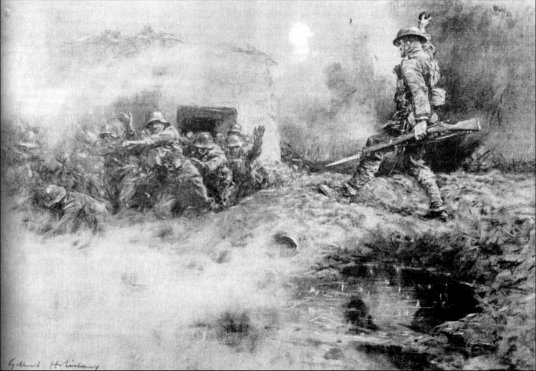
As the battalion advanced it came under fire from a machine gun in a bunker, which had not been hit by the barrage, close to the railway bridge over a road at Namur Crossing. A belt fed machine gun could fire 550 rounds a minute, nine shots a second, creating a wall of steel across the front of the battalion. By 1917 the army had learned lots of lessons, and the battalion halted while mortars were brought up to deal with the bunker. But before the mortars could be brought up, the fire of the machine-gun suddenly stopped. A minute later every man within sight was on his feet cheering and laughing, for stumbling through the mud towards the British line came a little crowd of the enemy with hands raised in surrender, and behind them came a solitary British soldier, labouring along under the weight of a machine-gun—the machine-gun. The cheering grew as he was recognised: “Dancox!” the troops shouted, “Good old Dando !”(2) Fred hadn’t heard the order to halt. He had continued to advance, working his way from shell hole to shell hole until he was behind the German bunker. He then went to the back door and walked into it holding a hand grenade and motioning for the Germans to leave – which they did.(3)

The above painting by Gilbert Holiday shows Private Dancox holding his bomb ready to throw as he orders his prisoners off to our lines. This painting is in the possession of the Regiment

Fred Dancocks’ courage was recognised with the award of the Victoria Cross. His was the first VC to a man from Worcester. He wrote home to say that he was given leave to return home and receive the medal from the King on the 30th November. Worcester prepared to celebrate the homecoming of the local hero in style: bunting was put up and alongside the Dancox family waited civic dignitaries, reporters, and hundreds of local people. He did not arrive.

Only a few weeks after the attack on 9th October, his unit took part in the attack at Cambrai on 20th November, and before he could take his leave, the Germans had counter-attacked. Fred Dancocks was killed by a a shrapnel ball to the head. His body was never found and hie is commemorated on on Panel 6 at the Cambrai Memorial, Louverval. (4)

Fred was not the first of his family to die in the Great War. His older brother William Dancocks was a regular soldier in the 3rd Battalion the Worcestershire Regiment and was killed on the 23rd October 1914, in the fighting East of Neuve Chapelle, one of six men from that unit to die on that day. He has no known grave and is commemorated on the Le Touret memorial to the Missing . (5) His younger step-brother, Thomas Whittle was killed on the Somme on 21st August 1916, serving with 1/7th Battalion The Worcestershire Regiment. He has no known grave, and is commemorated on the Thiepval Memorial a few hundred metres North of where his battalion fought on the day he died.(6)

Four months after Fred died his younger stepbrother, William Whittle was killed in the battle in defence of Amiens on 31st March 1918, serving with 2/8th Battalion the Worcestershire Regiment. This was another bad day for his battalion, as 37 men died that day in the less known 1918 battle of the Somme.. He has no known grave and is commemorated on the Pozieres memorial on the Somme.  (7)

Another brother, Henry Dancocks, survived the war having served alongside Fred in the 4th Battalion the Worcestershire Regiment.

That left Ellen with three dependent children in a world before the welfare state. King George wrote to Ellen to express his sincere regret that Fred’s death had denied him “the pride of presenting to him in person the Victoria Cross.” The City of Worcester established a public fund for Ellen Dancox, and made an initial donation of £50. In February 1918 the council minuted that ‘subscriptions were not coming in very satisfactorily’, but eventually a total of £451 was subscribed (which, in 2007, would have had the purchasing power of over £15,000). .The city council bought the medal from the family. Their house in Bull Entry was demolished in a slum clearance programme during the 1930s.

Besides the VC, Fred Dancocks and his brothers represent a loss as significant to their families as the Johnson’s reported in the Mail or the Niland Brothers whose story inspired the plot of Saving Private Ryan or the fighting Sullivans. The fact that none of these men has a known grave makes their fate particularly poignant. Yet relatively few people hear of or commemorate the Fred Dancocks and his brothers.

Dancox House, a sheltered accommodation facility in Worcester city centre, is named after him. In 2006 the Worcester and Herefordshire branch of the WFA erected a memorial to Fred Dancox VC close to Namur Crossing. It is only a short detour from the German cemetery at Langemarck. I first heard the story of Fred Dancocks and his brothers from Major John Cotterill who has championed the cause of the memory of the Worcesters for as long as I have known him and am grateful to him and for the work carried out by the Regiment by the local community for the information in the links which are the sources for this tale, which is worth telling and sharing.

Walter Flex and his Rushing Wild Geese

Walter Flex (wikipedia)

Poetry and music are very much part of the British story of the Great War. But what did the Germans sing?

I found Walter Flex in “The Lost Voices of Word War One, An International Anthology of Writers, Poets and Playwrights,” by Tim Cross. (Bloomsbury) ISBN 0-7475-0276-5 Flex said he wrote it whist on sentry duty in Lorraine, and it was first published in 1916  in his book “Between two Worlds“

1.Wildgänse rauschen durch die Nacht
Mit schrillem Schrei nach Norden –
Unstäte Fahrt! Habt acht, habt acht!
Die Welt ist voller Morden.

2.Fahrt durch die nachtdurchwogte Welt,
Graureisige Geschwader!
Fahlhelle zuckt, und Schlachtruf gellt,
Weit wallt und wogt der Hader.

3.Rausch’ zu, fahr’ zu, du graues Heer!
Rauscht zu, fahrt zu nach Norden!
Fahrt ihr nach Süden übers Meer –
Was ist aus uns geworden!

4.Wir sind wie ihr ein graues Heer
Und fahr’n in Kaisers Namen,
Und fahr’n wir ohne Wiederkehr,
Rauscht uns im Herbst ein Amen

This is translated as

1. Wild geese are rushing through the night,
With shrill cry, northbound rangers.
Hazard awaits, take care your flight
And world is full of dangers.

2. Fly through the night-filled air my friends,
You squadron grey and mighty.
Dawn breaks as battle cry extends
Far o’er the lands below ye.

3. Fly on, rush on, you grey-winged flight,
Rush on to Northlands safety.
When you fly south again some night,
What will my fate have made me?

4. We are, as you, a gray-clothed pack,
The Kaiser’s fighting yeomen.
Should our flight end with no way back,
Fly south and sound our Amen.
Tr. Frank 2002 http://ingeb.org/Lieder/wildgans.html

There are parallels with Flanders Fields in that it was written in the field and contrasts the war with nature. It touched a Germanic nerve for romanticism when coupled with the tune by Gotz and is claims to be the most popular soldiers song of the German army of the Great War.

https://www.youtube.com/watch?v=fz9aO1j0u1E

After the Great war the song was adopted by the Wandervogel movement of ramblers and hikers and other youth organisations – and the the Hitler Youth. It was a standard of the German soldier-songbooks of the Wehrmacht – with the references to the Kaiser changed..

The same song passed across frontiers. and has been adopted by French youth movements and the French Army’s airborne forces

and the school of quartermasters!

http://www.youtube.com/watch?v=KQSX5NRZ7d4

French Lyrics here:-  http://musique-militaire.fr/parachutistes/les-oies-sauvages

Of course the song fits the ethios of the Franco-German Corps

Is there any other song of the Great War which is still sung?

The Gunners who supported the Bayonet Charge that saved the British Army

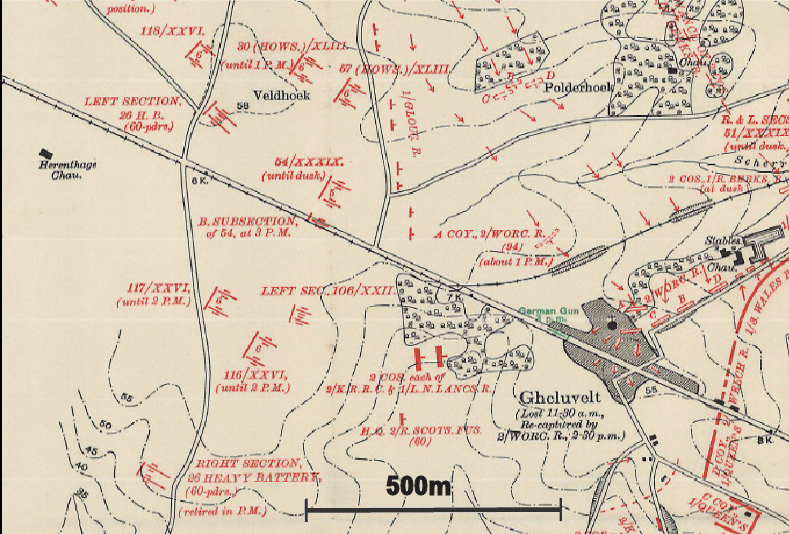
The Defence of Gheluvelt. - The Critical Day 31st October. Detail of a map compiled for the Official History of the War to accompany Military Operations, France and Belgium, 1914, Volume II
The Defence of Gheluvelt. – The Critical Day 31st October. Detail of a map compiled for the Official History of the War to accompany Military Operations, France and Belgium, 1914, Volume II

For ten years from 2000 -2010 every soldier who joined the army as an senior entry soldier took part in a Realities of War Tour to Ypres (modern Ieper) in Belgium. A whole generation of soldiers will have heard of the story of “the bayonet charge that saved the British Army.”, made by the 2nd Battalion the Worcester Regiment,  Far fewer will be aware of the gunners who supported them.

On the 31st of October the Germans Army nearly won the First World War. They had assembled an overwhelming force of artillery and battered a hole in the British front line East of Ypres at a village called Gheluvelt, on the road between Ypres and Menin, the Menin Road. The only British reserved were the 2nd Battalion the Worcester Regiment, and they mounted a gallant bayonet charge which stopped the Germans and allowed the British line to recover, but at the cost of one third of their number.

But they did not do this alone. They were supported by the Gunners, and in particular by a heroic and skilful action by 54 Dragon Battery, which was one of the batteries which became 129 Dragon Battery, currently part of 4th Field Regiment Royal Artillery.

The map from the Official History of the War in France and Flanders shows a part of the battle of Gheluvelt. It shows German guns at the Western end of Gheluvelt and the position of 54 Battery ­

According to an infantry officer nearby “Lt Blewitt of 54 Battery came up to say to his battery commander that the Germans appeared to be bringing a gun to the barricade in the middle of Gheluvelt and asked permission to take an 18 pounder onto the road and deal with it. Having got permission, he manhandled the gun onto the road. The German gun fired first and missed. Blewittt did not give them a second chance. He put a stop to any trouble from that quarter for the rest of the afternoon. If the Germans had pushed home their attack during the afternoon there was nothing to stop them.”” Lt Blewitt was awarded the DSO for this action. His letters are in the Imperial War Museum archives. At the time his letters home gave no hint to his family and fiancé of the dangers he ran or his heroic and skillful acts.

Three years later, while a Gunnery instructor on England, he was persuaded to write about the circumstances which led to his award for gallantry. He wrote “My layer at the time was Bombardier Steel, whose efficiency I think solely we all – the detachment and I , owe our lives. The detachment as far as I can remember was: Sergeant, now (1917) BSM Howes, a sturdier man than whom never stepped, as No 1, Bombardier Steel, layer,. Bombardier Priestley, (killed a few days later1), No 6, while think Gunners Hobson and Delamere,(Both at later times my servant, the first wounded by a French battery few days later, and the latter gassed as a sergeant in the battery this year). Made up the crew. Who the last man was I can’t remember, but a damn fine crowd they were, every one of them.”

The German infantry in Gheluvelt. was the 16th Bavarian Reserve Regiment, most famous for one its soldiers, the 19 year old Adolf Hitler. . .

1Gunner (Local Bombardier?) Alfred Priestley, husband of Nancy Priestley of Preston is commemorated on the Menin Gate.

See where this happened and contact Gunner Tours!

gunner tours logo white on brown